Every winter, more than 300 black-necked cranes fly in from the Tibetan Plateau and circle Gangtey Gonpa three times before settling in Phobjikha Valley. The valley has been welcoming them with a festival since 1998, and the Black Necked Crane Festival in Bhutan 2026 falls on 11 November in the monastery's courtyard. It is one day of folk songs, mask dances, and school performances, led by a crane dance that local children perform every year. Behind the celebration is a simple purpose: keeping this valley safe for the birds that return to it.
If you are planning to be there, this guide covers the festival dates and venue, what to expect through the day, how to reach Phobjikha from India, the best time to visit Bhutan for the crane festival season, and the practical tips worth knowing before you go.
If you would like the valley built into a longer trip, WanderOn's Bhutan tour packages are a good place to start.
Black-Necked Crane Festival Dates and Location 2026
best bhutan tour packages
What Is the Black-Necked Crane Festival?
The Black-Necked Crane Festival in Phobjikha marks something the valley waits for all year — the arrival of the cranes. What started as a small community gathering in 1998, set up by the Royal Society for Protection of Nature (RSPN) as part of its conservation and community-development work in Phobjikha, has grown into one of the most talked-about dates on Bhutan's calendar.
But calling it just a tourist event overlooks its true purpose. The festival exists to get people invested in protecting the cranes and the wetlands they depend on, while giving the valley's own community a stage to show off its culture and earn something from the visitors who come through. Since 2005, it's been held at Gangtey Monastery, and today it's run by the Gangteng-Phobji Environment Management Committee (GPEMC).
Why Is Phobjikha Important for Black-Necked Cranes?
Phobjikha Valley isn't just another stop on the migration route. It's one of Bhutan's most important wintering grounds for black-necked cranes, and the numbers back that up. RSPN puts the figure at over 300 cranes settling into the valley each winter, drawn in by the wetlands, farmland and open habitat that give them room to feed and roost through the cold months.
These birds fly in from their breeding grounds on the Tibetan Plateau, and by the time they touch down in Phobjikha, their arrival has already become woven into the rhythm of local life. That's the reason the festival leans as hard into conservation as it does into celebration—the two have never been separate things here.
Why the Cranes Are Sacred Here
In Phobjikha, the cranes are treated as heavenly birds, and their arrival is read as a good sign. Locals say they circle Gangtey Gonpa three times when they land and again when they leave in spring. The community also sees the cranes as a symbol of longevity, which is why they appear in local songs and dances, and giving them the space they need through winter.
Black Necked Crane Festival in Bhutan 2026: What to Expect
The program runs across a full day and doesn't follow one fixed order — folk songs, mask dances, environmental dramas and school performances are all part of it, but the exact sequence shifts from year to year.
- The Children's Crane Dance: This is the performance most visitors remember. Local schoolchildren dance in a routine choreographed around the movements of the black-necked crane, and it's become the festival's most recognisable moment — worth building your day around if you only catch one act.
- Traditional Performances: Bhutanese folk dances and mask performances by locals and monks fill out the rest of the day. Some years add extra community acts on top, but until PEMC confirms the 2026 schedule, treat those as a possibility rather than something guaranteed.
- Conservation Activities: The Black Necked Crane Festival exists because of this, not despite it. RSPN set it up to build awareness around protecting the black-necked crane and its habitat, and that purpose runs through the day's events — a reminder that this isn't just a cultural show, but part of an ongoing effort the valley keeps up long after visitors leave.
Things to Do in Phobjikha Around the Black Necked Crane Festival
The Black Necked Crane Festival in Bhutan itself takes up just one day, but Phobjikha rewards a slower visit — enough to fold in comfortably with the rest of a Bhutan trip. WanderOn's Explore Bhutan in 8 days—Phobjikha Valley, monasteries itinerary already routes through Phobjikha Valley alongside the country's major monasteries, so a festival visit can sit naturally inside a longer trip rather than needing one of its own.
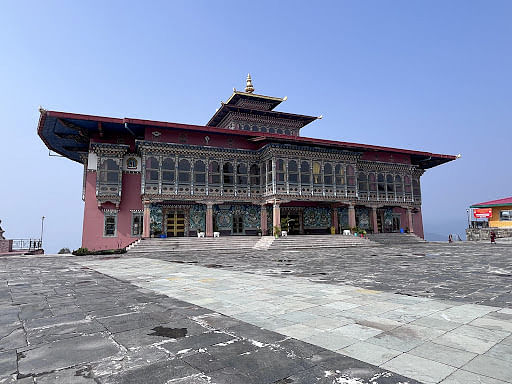
- Visit Gangtey Gonpa: This is where it all happens — the monastery's courtyard has hosted the festival since 2005, and it's one of the few monasteries in Bhutan where you can watch monks going about daily prayer routines with the entire valley spread out below. Worth visiting even outside festival dates for that view alone.
- Go Crane Watching: Set aside time separate from the festival programme to actually look for the cranes in the wild. Bring binoculars if you have them, keep a respectful distance, and treat this as its own experience — the birds tend to gather near the wetlands early morning or just before dusk, and watching them in that setting hits differently from watching a performance about them.
- Walk the Gangtey Nature Trail: A short, flat trail that cuts straight through the valley floor, past farmhouses and grazing yaks, with the wetlands visible for most of the walk — one of the easiest ways to actually get close to where the cranes spend their winter. Pair it with a local farmhouse stop or a traditional home-cooked meal for a slower side of Phobjikha once the festival crowd thins out.
- Visit the Black-Necked Crane Information Centre: Worth an hour or two if you want more context than the festival gives you — tracking data, photographs and habitat details that show the actual conservation work behind the celebrations.
How to Reach the Bhutan Crane Festival from India
Phobjikha Valley is in central Bhutan, so Indian travellers usually reach Bhutan first and then continue to Phobjikha by road. You can enter Bhutan by air through Paro or by road through one of the designated land entry points from India. Bhutan Tourism currently lists direct flights from Delhi, Kolkata, Guwahati and Bagdogra to Paro, while official road entry points from India include Phuentsholing, Gelephu, Samtse and Samdrup Jongkhar.
For the festival, the practical options are:
WanderOn Insights:
- For most travellers heading specifically to the Black-necked Crane Festival in Bhutan 2026, flying to Paro or entering through Phuentsholing makes more sense than choosing an eastern land entry point simply to reach Phobjikha.
- Bhutan Tourism recommends arranging a vehicle and driver for travel within the country. Self-drive vehicles cannot be hired in Bhutan, so plan the Phobjikha leg with your tour operator, hotel or an authorised transport provider.
- If you are travelling specifically for the festival, reaching Phobjikha on 10 November is more practical than trying to arrive on the morning of the event. You can then attend the festival without depending on a long mountain road journey on the same day. It also gives you time to explore the valley and look for cranes before the festival begins
Best-Selling Bhutan Trips 2026
Best Time to Visit Bhutan for Crane Festival
- The best time to visit Bhutan for crane festival dates is November to February, when the valley's temperatures drop enough to hold the cranes through winter. The Black Necked Crane Festival Phobjikha 2026 falls on 11 November, timed deliberately to coincide with the peak of the birds' arrival rather than picked as an arbitrary festival date.
- If the festival itself is the reason for your trip, aim to be in Phobjikha by 10 November — mountain roads into the valley can run longer than expected, and you don't want the only buffer in your schedule to be festival morning itself.
- Staying back an extra day or two afterward is worth it too: the valley empties out once the crowds leave, and that's often when crane sightings near the wetlands are easiest, away from the noise of the event.
- Timing your trip for November also means you can fold in some of the broader Bhutan festivals in November calendar, since several valleys hold their own local celebrations around the same window — though Phobjikha's crane season itself stretches well past the festival date, so there's no real need to lock your visit to that one weekend if your dates don't line up.
Travel Tips for the Black-Necked Crane Festival Phobjikha
- Reach Phobjikha a day early: Arrive by 10 November so a delayed mountain drive doesn't cost you the one day the Black-Necked Crane Festival Phobjikha actually runs.
- Carry warm layers: At roughly 3,000 metres, Phobjikha's winter mornings drop well below what most travellers expect from Bhutan.
- Carry binoculars: The best crane sightings happen at a distance, near the wetlands rather than close to the festival grounds itself.
- Don't approach the birds: Feeding and roosting areas are exactly that — leave them undisturbed, even if a closer photo feels tempting.
- Book accommodation early: Phobjikha's guesthouses are limited, and festival dates fill up faster than the rest of the valley's calendar.
- Check the final programme before you go: Most editions run roughly 9:30 AM to 3-4 PM, but the lineup shifts year to year, so confirm timings closer to the date.
- Build in road-time buffer: Distances between Bhutanese valleys often take longer than map estimates suggest, especially on mountain routes.
The Black Necked Crane Festival in Bhutan 2026 is one of the best festivals in Bhutan for travellers who want culture and wildlife in a single day, and it is worth building a trip around. Reach Phobjikha by 10 November, keep a day or two spare, and you will leave with far more than festival photos.