Christmas in Europe is a good excuse to spend a few days wandering through Christmas markets, trying seasonal food and seeing cities dressed up for the holidays. You could sip mulled wine in Vienna, browse Strasbourg’s wooden market stalls, walk through Prague’s Old Town Square or head north to look for the Northern Lights.
Planning a Christmas trip to Europe from India takes a little more thought, though. Market dates vary by city, some attractions close over Christmas, and December flights and hotels can get expensive. If you’re hoping to celebrate Christmas and New Year in Europe on the same trip, your route matters just as much as your destination.
We have taken travellers through Europe in December for several seasons, and this guide is built on those trips. It covers the best Europe christmas markets with their 2026 dates, how different countries celebrate, the weather to pack for, the visa and budget planning Indian travellers need, and the best cities to welcome 2027.
Here’s how to choose where to go, which Christmas markets in Europe to put on your list, and what to know before booking your winter holiday. If you’re looking for a planned itinerary, comparing Europe tour packages can also help you decide which cities and experiences fit your travel dates and budget.
Christmas in Europe 2026: Quick Facts
Christmas Day 2026: Friday, 25 December
First Advent Sunday: 29 November 2026
Christmas market season: Mid-November to early January, depending on the city
Markets that close earliest: Most German markets, on 23 or 24 December
Markets open after Christmas: Prague, Brussels, Colmar and Vienna's Schönbrunn Palace
Europe in December weather: Around -2°C to 9°C in most central and western cities; milder in Spain and Italy
Daylight: Sunset around 4 pm in Vienna and Prague; no sunrise in Tromsø
Visa for Indian travellers: Schengen visa (€90 for adults); a separate visa for the UK
Border check: EES biometric registration on first entry into the Schengen area
When to book flights: By early September
New Year's Eve: Thursday, 31 December 2026
Three Kings' Day: Wednesday, 6 January 2027
Best-Selling Christmas and New Year Tour Packages
Best Christmas Markets in Europe 2026
Europe Christmas markets follow very different calendars, and this is the detail that shapes every December trip we plan. German markets close on 23 or 24 December, so a traveller who lands on Christmas Day finds empty squares in Nuremberg and Cologne. Markets in Austria, Czechia, Belgium and parts of France stay open into the new year, which makes them the better choice if you are on Christmas and New Year tour packages.
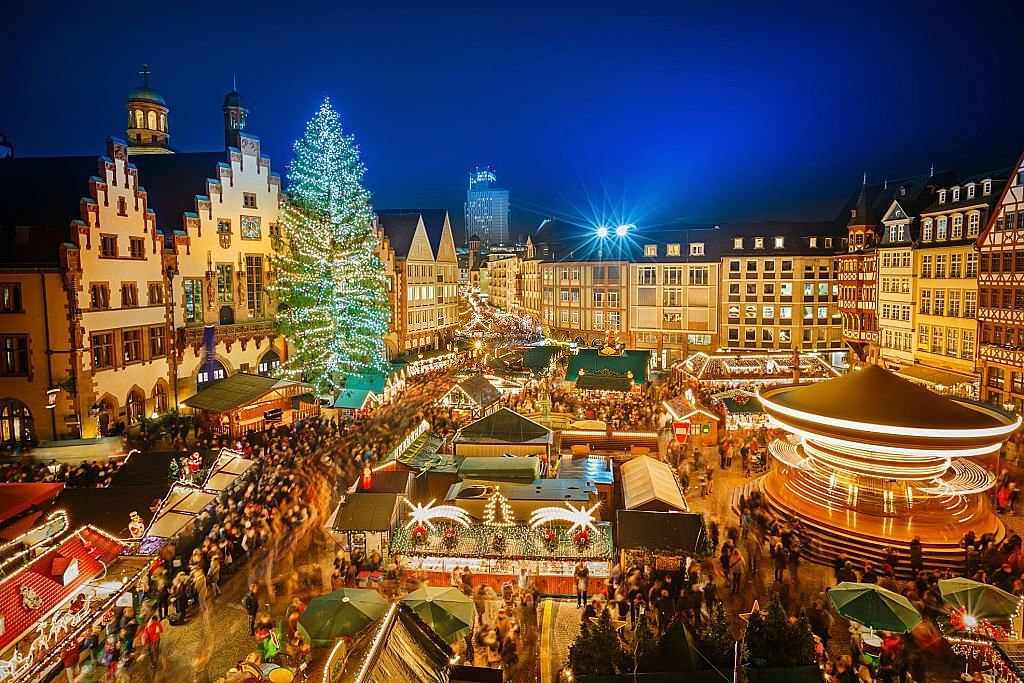
The Vienna Christmas market at Rathausplatz is set against the neo-Gothic City Hall, with the park trees hung with lights, an ice-skating trail and a separate area for children. Vienna has more than a dozen markets, and the one at Schönbrunn Palace runs right through the New Year. Spend at least one evening at Spittelberg too, where the stalls fill narrow Biedermeier lanes and sell more handmade crafts than souvenirs.
Vienna Christmas market dates 2026: Rathausplatz, 13 November to 26 December. Schönbrunn Palace, 6 November 2026 to 6 January 2027.
Strasbourg, capital of Christmas, has held its Christkindelsmärik since 1570, and the city officially uses the title Capitale de Noël. Stalls spread across a dozen squares around the cathedral, and a towering fir tree rises over Place Kléber. Stay for at least one evening, then take the 30-minute train to Colmar the next day.
2026 dates: 27 November to 24 December. The stalls close on the evening of 24 December and do not reopen on Christmas Day.
Nuremberg's Christkindlesmarkt on Hauptmarkt is the market every other German market is measured against. On opening night, the Christkind reads her prologue from the balcony of the Frauenkirche to a packed square, and the stalls sell Lebkuchen, hand-carved wooden toys and Nürnberger Rostbratwürste, the finger-sized sausages served three to a bun.
2026 dates: 27 November to 24 December. Arrive an hour early on the opening evening if you want to see the Christkind.
Dresden's Striezelmarkt has filled the Altmarkt since 1434, making it one of the oldest Christmas markets in Germany. It takes its name from Striezel, the old word for Stollen, and a towering Erzgebirge Christmas pyramid turns slowly above the stalls. If you're experiencing Christmas in Germany, look for hand-carved nutcrackers and smoking figures from the Ore Mountains, which make some of the best gifts to bring home.
2026 dates: 25 November to 24 December.
Cologne's Cathedral market sits on Roncalliplatz beneath the twin Gothic spires, and it is the market most travellers come for. A few minutes away, Heinzels Wintermärchen fills the old town with an ice rink and stalls themed on the city's legendary house elves, while the Markt der Engel at Neumarkt is quieter and strung with stars. Each market serves Glühwein in its own collectible mug.
2026 dates: The Cathedral market is scheduled for 16 November to 23 December.
Winter Wonders spreads festive stalls from the Bourse to Place Sainte-Catherine, and the Grand Place hosts a sound-and-light show on its gilded guildhalls every evening. Pair the market with Belgian waffles and a hot chocolate from one of the old chocolatiers around the Galeries Royales Saint-Hubert.
2026–27 dates: 27 November 2026 to 3 January 2027.
7. Prague, Czech Republic
Prague's Old Town Square market sits between the Gothic spires of the Týn Church and the Astronomical Clock, with a tall tree lit at its centre. Try trdelník warmed over coals and a cup of svařák, the Czech mulled wine. Wenceslas Square hosts a second market, and both stay festive well after Christmas.
2026–27 dates: The Old Town Square market is scheduled for 28 November 2026 to 6 January 2027.
Colmar has six themed Europe Christmas markets linked by streets of half-timbered Alsatian houses, and the canal quarter known as Little Venice is especially beautiful when it is lit after dark. Order a slice of flammekueche, the thin Alsatian flatbread, with a cup of vin chaud, and browse the stalls for blown-glass ornaments from the nearby Vosges, a perfect addition to your Europe couple honeymoon packages.
2026 dates: 23 November to 29 December.
Salzburg's Christkindlmarkt fills Domplatz and Residenzplatz beneath the Hohensalzburg Fortress, one of the largest medieval castles in Europe. On Advent evenings, brass bands and choirs perform around the cathedral. A half-day trip to Oberndorf, where "Silent Night" was first sung in 1818, makes this stop especially meaningful.
2026 dates: The market usually runs from late November until 1 January. Confirm the 2026 dates before booking.
Tallinn's walled medieval Old Town is one of the best-preserved in Europe, and its Town Hall Square market is gathered around a tall tree that the city links to a tradition dating back to the 15th century. With snow on the red rooftops and daylight fading by 3:30 pm, it feels closer to a Christmas card than almost anywhere else in Europe.
2026–27 dates: The market usually runs from late November into early January. Confirm the 2026 dates before booking.
A quick planning tip: If a traditional German market is your priority, arrive before 24 December. If you land on Christmas Day or later, build your route around Vienna, Prague, Brussels, Colmar and Tallinn, where the Europe christmas markets stay open.
How Europe Celebrates Christmas
Christmas in Europe is not one celebration but dozens. The main day, the main meal and even the person who brings the presents change as you cross a border. Knowing these traditions helps you choose where to be on which date, especially when planning a multi-country trip with Europe group tour packages, and makes the Christmas markets far more meaningful.
The Christmas markets Europe is best known for began in German-speaking towns in the late Middle Ages, and they are still at the heart of the season here. On the evening of 5 December, children leave a polished boot outside the door for St. Nicholas to fill with sweets. Christmas Eve is the main celebration: families decorate the tree that afternoon, eat a simple dinner, and open presents brought by the Christkind rather than Santa. "Silent Night" was first sung in Oberndorf, near Salzburg, in 1818, and many Austrians still save it for Christmas Eve.
Where to go: Vienna, Salzburg, Nuremberg, Dresden and Cologne are covered in the market list above. Add Munich for its Christkindlmarkt at Marienplatz and the hand-carved nativity figures at the nearby Kripperlmarkt. Our Christmas in Germany guide covers the country's markets in more detail.
Best for: Traditional Christmas markets, Glühwein, Lebkuchen, handmade gifts and historic old towns.
The French Christmas centres on Le Réveillon, a long dinner on 24 December that begins with oysters and foie gras and ends with a bûche de Noël, the Yule log cake. If you're spending Christmas in Paris, you can enjoy festive dinners and seasonal treats, while Alsace, home to Strasbourg and Colmar, has traditions closer to Germany's, with Advent calendars, bredele biscuits and markets that have run for more than four centuries.
Where to go: Strasbourg and Colmar are covered above. In Paris, walk the Champs-Élysées lights, see the Christmas windows at Galeries Lafayette and browse the market in the Tuileries Garden; our Christmas in Paris guide covers the city in full. In Lyon, the Fête des Lumières around 8 December lights up the city with candles in every window and large light installations across the old town.
Best for: Christmas lights, food, grand department store windows and festive old towns.
Spain opens its season on 22 December with El Gordo, the national Christmas lottery that the whole country watches on television. The biggest celebration comes on 6 January, when the Three Kings parade through the streets the evening before and bring children their presents. In Italy, Christmas Eve is a fish-based dinner, nativity scenes fill every church, and on 6 January La Befana, a kindly old woman on a broomstick, brings sweets to good children.
Where to go:
• Barcelona: The Fira de Santa Llúcia has been held beside the cathedral since 1786, and it sells nativity figures and the cheerful Caga Tió log that Catalan children tap for sweets.
• Málaga: Calle Larios is famous for its light canopy and nightly light shows, and the city is warm enough for a light jacket.
• Madrid: The Plaza Mayor Christmas market sells nativity figures, decorations and joke-shop costumes for Spain's version of April Fool's Day on 28 December.
• Milan: Visit the market near the Duomo and try panettone, the tall sweet bread Milan made famous.
• Rome: See the nativity scene and tree in St. Peter's Square, and the market stalls in Piazza Navona.
• Bolzano: This market in the Dolomites blends Alpine and Italian traditions, with snow-capped peaks rising above the stalls.
4. Poland and Central Europe
Polish families wait for the first star to appear in the sky on Christmas Eve before sitting down to Wigilia, a meatless dinner of twelve dishes. Many homes set an extra place at the table for an unexpected guest. In Czechia, families traditionally buy a live carp for Christmas Eve dinner, and you may still see carp sold from street-side tanks in the days before Christmas.
Where to go: Prague and Tallinn are covered above. Add Kraków for its market in the Main Market Square, one of the largest medieval squares in Europe, and Wrocław for its old-town market and the hundreds of small bronze dwarf statues hidden around the city. In Budapest, the markets at Vörösmarty Square and St. Stephen's Basilica pair perfectly with an afternoon in the Széchenyi thermal baths. Zagreb's Advent fills the city centre with concerts and food stalls through the season.
Best for: Old-town markets, lower prices, local traditions and multi-city trips by train.
5. Scandinavia and Iceland
On 13 December, Sweden celebrates St. Lucia's Day, when girls in white gowns with candle crowns lead processions through churches, schools and offices. In Iceland, the thirteen Yule Lads, mischievous figures from local folklore, visit one by one on the thirteen nights before Christmas, leaving gifts in the shoes children place on their windowsills.
The Northern Lights are a natural phenomenon, not a scheduled show. Sightings depend on darkness, solar activity and clear skies, so allow at least three or four nights if seeing them matters to you.
Where to go:
• Tromsø, Norway: A popular base for Northern Lights excursions, Arctic experiences and winter activities. Plan for very short daylight hours in late December.
• Rovaniemi, Finland: Visit Santa Claus Village on the Arctic Circle and book husky or reindeer rides well in advance.
• Stockholm, Sweden: The Christmas market on Stortorget in Gamla Stan has run since the 19th century and sells Swedish saffron buns and hand-dipped candles.
• Copenhagen, Denmark: Tivoli Gardens turns into a winter village of lights, rides and Danish æbleskiver.
• Reykjavík, Iceland: Use the capital as a base for winter excursions, and keep your plans flexible because weather often affects road conditions.
Best for: Arctic landscapes, Northern Lights, snow activities and a colder, outdoor-focused holiday.
British Christmas is built around Christmas Day lunch of roast turkey, Christmas crackers that snap open to reveal paper crowns and jokes, and the King’s speech at 3 pm. Boxing Day on 26 December is a public holiday known for football matches and big sales. If you’re spending Christmas in London, plan your travel ahead, as the London Underground does not run on Christmas Day.
Where to go:
• London: See the lights on Regent Street and Oxford Street, and visit Winter Wonderland in Hyde Park.
• Edinburgh: Visit the market on East Princes Street Gardens below the castle, and stay for Hogmanay if your dates allow.
• Manchester: Explore the city's Christmas markets, which spread across several squares in the city centre.
• Bath: Walk through the Georgian streets around the Abbey, where the Christmas market sits in the shadow of the old Roman city.
Best for: Festive shopping, theatre, Christmas lights and city breaks.
• Pack layers rather than one heavy coat: Bring thermals, a warm mid-layer, a waterproof jacket, gloves, a woollen cap and boots with good grip, because market squares turn icy after dark.
• Plan around short days: Do your outdoor sightseeing between 10 am and 3 pm, and save the markets for the evening, when the lights are on.
• Check Christmas opening hours: Many museums, shops and restaurants close early on 24 December and stay closed on 25 December, and in Germany, Austria and the UK they close on 26 December too.
• Expect reduced transport on Christmas Day: Most cities run a Sunday or holiday timetable on 25 December, and the London Underground does not run at all, so arrange how you will reach your hotel in advance.
• Book popular experiences early: Northern Lights excursions, husky rides, Christmas Eve dinners and classical concerts in Vienna often sell out by November.
• Leave slack in your route: Snow can delay mountain roads and some trains, so avoid tight same-day connections between cities.
Planning a Europe Winter Trip from India: Visa, Budget and Routes
A Europe winter trip from India comes together most smoothly when you fix your dates and route first, then apply for the visa, and finally book your flights. Late December is peak season across the continent, so planning your Europe tourism experience early gives you more choice when it comes to fares, hotels and the cities you want to explore.
Do Indians Need a Visa for Europe in December?
Indian passport holders need a Schengen visa for a short holiday in the Schengen area, which now includes Croatia, Romania and Bulgaria. For a Schengen visa, December is one of the busiest months of the year, and appointment slots at VFS centres in Delhi, Mumbai and Bengaluru fill up through September and October.
• Where to apply: Apply through the country where you will spend the most nights. If your nights are split equally, apply through the country you enter first.
• When to apply: The European Commission allows applications from six months before travel up to 15 days before. Standard processing takes 15 days but can stretch to 45, so we advise our travellers to apply by early October.
• Cost and insurance: The visa fee for adults is €90, and you need travel insurance with medical cover of at least €30,000 for the whole trip.
• The UK and Ireland: Neither country is part of Schengen. If your route includes London, Edinburgh or Dublin, you need a separate visa for each and should apply alongside your Schengen visa.
What Are the EES and ETIAS?
The EU's Entry/Exit System (EES) became fully operational on 10 April 2026. On your first entry into the Schengen area, your fingerprints and a facial photograph are recorded at the border in place of a passport stamp, so allow extra time at immigration in Paris, Frankfurt, Vienna and other busy hubs.
ETIAS is a separate travel authorisation for visa-exempt travellers. Indian citizens who need a Schengen visa do not need ETIAS, so do not pay any website that offers to arrange one for you.
Official information: EU Entry/Exit System and European Commission guidance on EES and ETIAS.
Can You Celebrate Christmas and New Year in Europe on One Trip?
Yes, and it is the trip our travellers ask for most. The secret is order: visit the German and Alsatian markets before 24 December, spend Christmas somewhere that stays festive afterwards, and finish in a city with a big New Year's Eve. These three routes work well.
• Central Europe by train: Start in Munich and Salzburg before 24 December, spend Christmas in Vienna, where Schönbrunn's market stays open until 6 January, and finish in Prague for New Year, with the Old Town Square market still running around you.
• France and Belgium: See Strasbourg and Colmar before Strasbourg closes on 24 December, spend Christmas in Paris, and end in Brussels, where Winter Wonders runs until 3 January, or stay on in Paris for the Champs-Élysées countdown.
• Christmas in the north: Spend Christmas in Rovaniemi or Tromsø for snow and the Northern Lights, then fly to Helsinki, Stockholm or Copenhagen for a city New Year.
Keep to two or three bases. A trip that changes cities every night leaves you tired, and in December the best moments happen in the evenings, when you are standing in a lit square rather than sitting on a train.
New Year in Europe 2026–27: Where to Ring in 2027
New Year in Europe looks completely different from one city to the next, so choose your city based on the kind of night you want.
• Vienna, Austria: The New Year's Eve Trail winds through the old town with stages, food stalls and waltz lessons in the streets, and the year opens with the Vienna Philharmonic's New Year's Concert on 1 January. Concert tickets are allocated by lottery months in advance, so most visitors watch the broadcast on big screens instead.
• Berlin, Germany: The biggest open-air party in the country takes place at the Brandenburg Gate, with live music along the Straße des 17. Juni and fireworks at midnight.
• Paris, France: Crowds gather on the Champs-Élysées for a light show projected onto the Arc de Triomphe, followed by fireworks at midnight. Arrive by 10 pm for a good spot.
• Madrid, Spain: At Puerta del Sol, the crowd eats twelve grapes, one for each chime of the clock at midnight, for good luck in each month of the new year.
• Edinburgh, Scotland: Hogmanay runs for several days, with a torchlight procession through the old town and a ticketed street party below the castle.
• London, England: The fireworks over the Thames need a paid ticket bought weeks in advance, and the viewing areas along the river are closed to anyone without one.
• Reykjavík, Iceland: Neighbourhood bonfires are lit on New Year's Eve, and at midnight the whole city sets off its own fireworks.
On 31 December and 1 January, restaurants, public transport and attractions run on holiday arrangements. Book your New Year's Eve dinner by November, and plan your route back to the hotel before midnight, because stations near the main celebration areas are often closed for crowd safety.
Plan Your Christmas in Europe
The best Christmas in Europe is the one built around what you want from the season. Choose Germany and Austria for traditional markets, Alsace for fairy-tale old towns, Spain and Italy for food and milder weather, and Scandinavia for snow and the Northern Lights. Fix your dates around the markets, apply for your visa early, and give each city at least two evenings.
After years of December departures, one lesson stays the same: the travellers who enjoy Europe in December most are the ones who slow down. Stand in a square as the lights come on, order a second cup of Glühwein, and let the city show you how it celebrates.