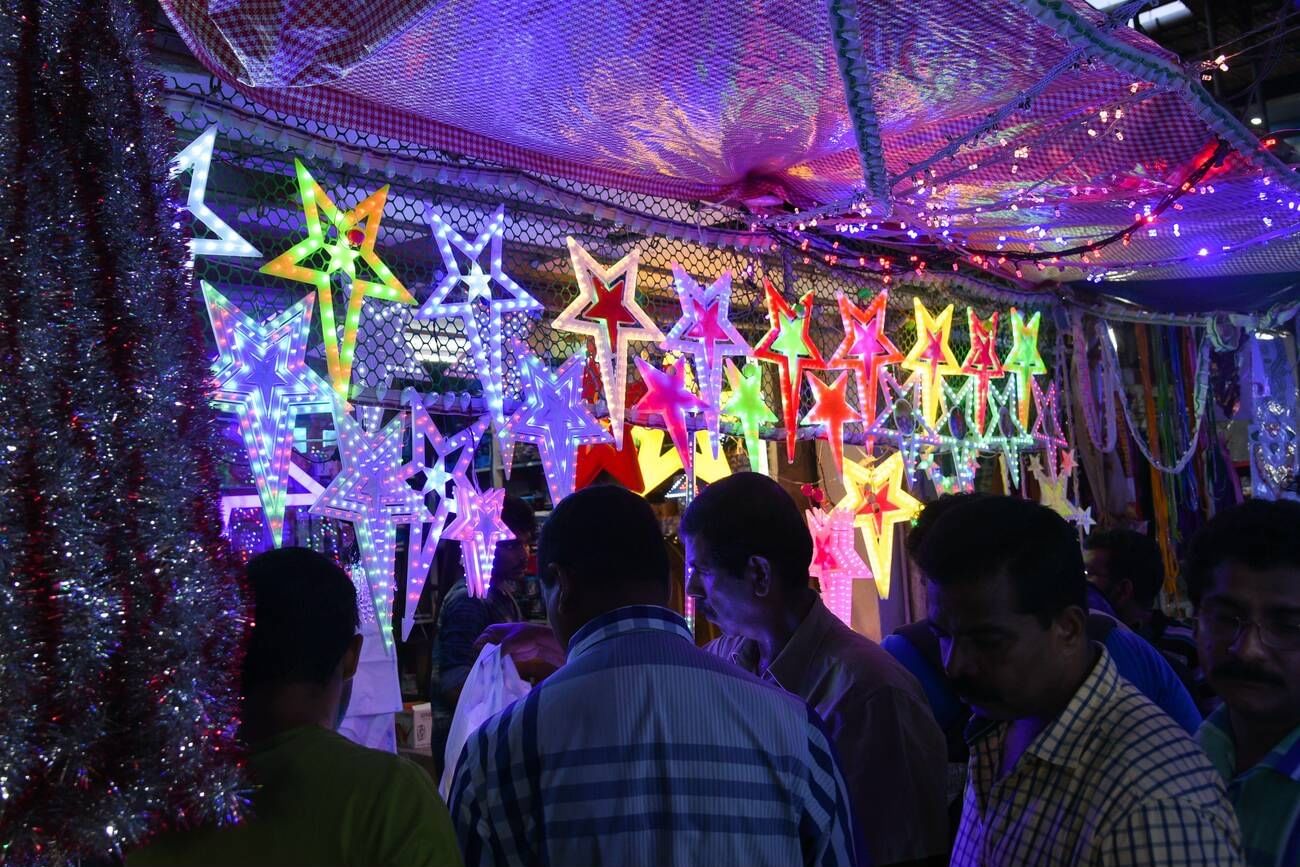
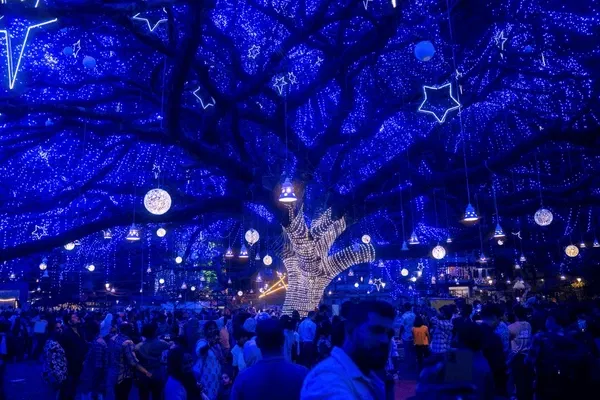
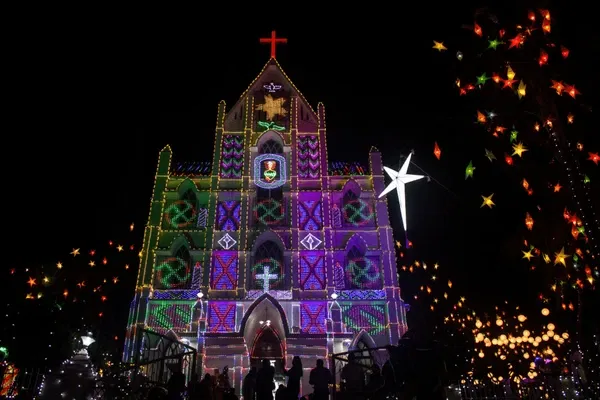
Christmas in Kerala is a public season, and much of it happens nowhere else in India. Close to 18 per cent of the state is Christian, and from mid-December the lanes of Fort Kochi , Thrissur, Kottayam and Thiruvananthapuram fill with paper stars, cribs and the smell of cake.
Father Christmas here is Christmas Appooppan, who goes house to house with the parish carol group. Breakfast on the 25th is toddy-leavened kallappam with stew, lunch is Kuttanad duck roast, and the plum cake comes with grape wine fermented at home since October; India's first Christmas cake was baked in Thalassery in 1883. In Fort Kochi the season refuses to end: the Cochin Carnival runs from Christmas Day to a New Year's Day procession.
Christmas 2026 falls on Friday 25 December and New Year's Day on Friday 1 January 2027, so four days of leave make a nine-day holiday, the natural span for Christmas and New Year tour packages to Kerala.
Christmas in Kerala at a Glance
Base yourself in Fort Kochi, arrive by the afternoon of 24 December, and stay through 1 January if you can. Kerala in December is dry, mild and at its most festive, which is also why it is the most expensive and fully booked month of the year.
A Fort Kochi Christmas: Lit Basilicas, Star-Strung Lanes and the Carnival That Follows
Fort Kochi is where to spend Christmas in Kerala. Everything happens within a twenty-minute walk, and nothing needs a car.
The three churches that matter on 24 December
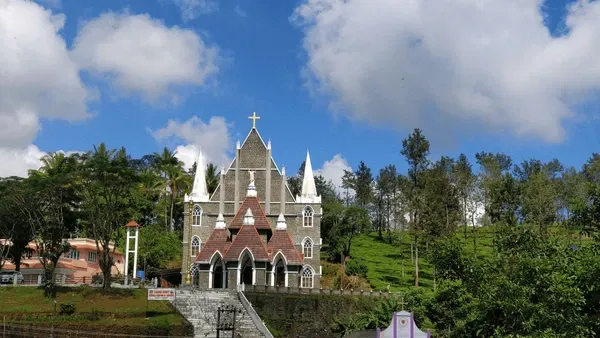
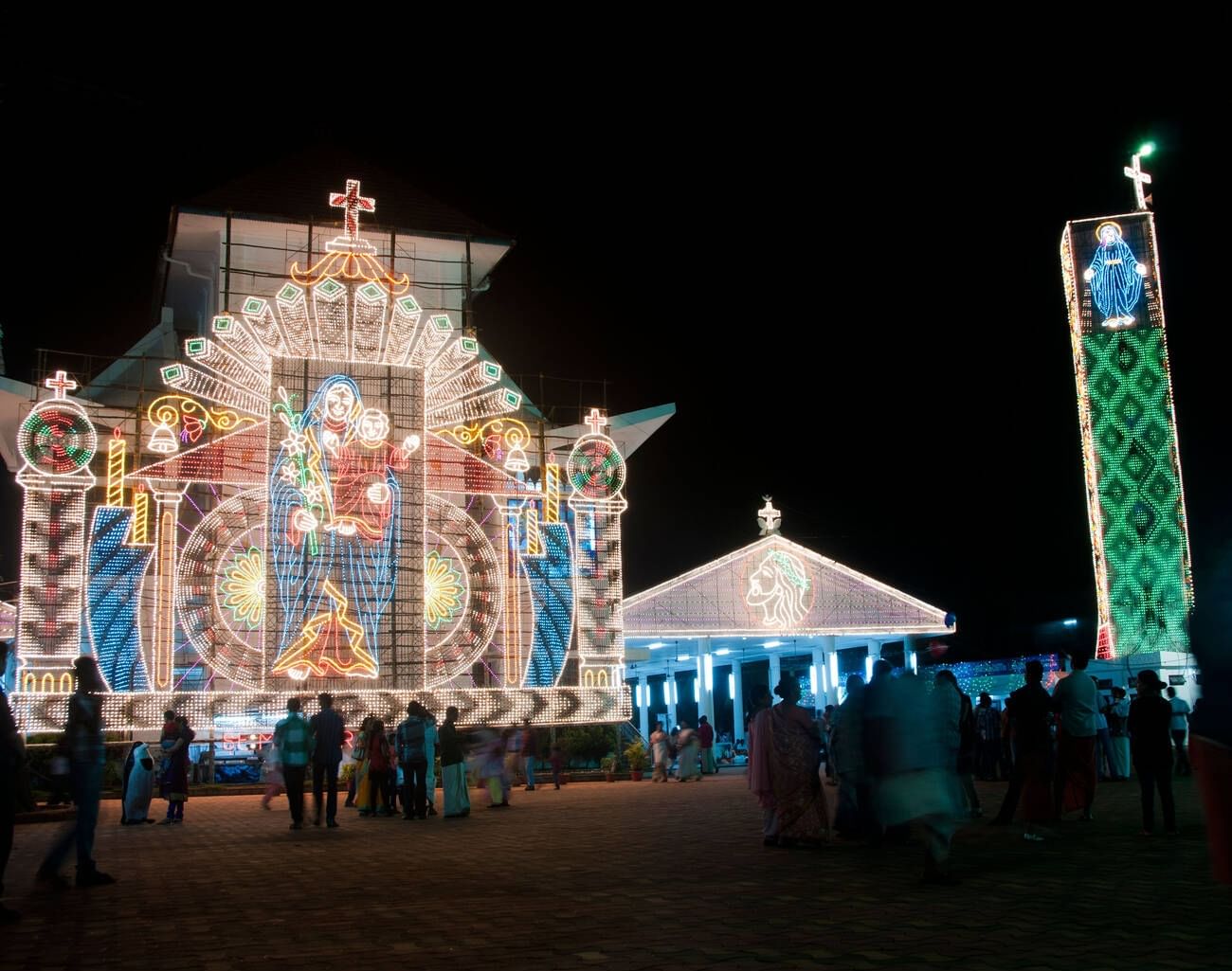
- Santa Cruz Cathedral Basilica, K.B. Jacob Road: the one the crowd goes to. The façade is floodlit, the nave is full by 11 pm, and the street outside becomes the real gathering after 1 am, when families spill out for cake and coffee.
- St Francis Church: built in 1503, the oldest European church in India. A shorter, quieter service for anyone who wants to hear the liturgy rather than stand in a crowd.
- Basilica of Our Lady of Ransom, Vallarpadam: across the harbour, a pilgrimage church for the whole state. Worth the ferry on a second day.
The lanes, and when to walk them
Princess Street, Burgher Street and Rose Street are strung with illuminated stars from about 15 December, and homestays put cake and wine on tables by their gates. Walk them between 7 and 9 pm on Christmas Eve, before the mass crowd arrives, and be at the Basilica by 10:30 pm for a seat.
On Christmas Day, the parade ground and Fort Kochi beach open the carnival, and the Chinese fishing nets take the sunset. For a church-by-church walk with mass timings, our guide to christmas in Kochi goes lane by lane.
Kochi Carnival at Christmas: the ten days that turn a weekend into a week
The carnival is the reason to stay, and most first-time visitors do not know it exists. Fort Kochi has run the Cochin Carnival since 1984, a descendant of the Portuguese New Year. It opens around Christmas Day and closes on 1 January with the grand procession of floats, caparisoned elephants and marching bands.
Every evening in between brings beach games, cycle and bike races, kalaripayattu displays and music on the parade ground, so a Kochi carnival Christmas is better planned as a week than as a weekend. The 2026-27 programme had not been published when this guide was written (21 October 2026); recent editions ran from 25 December to 1 January. Our Cochin Carnival guide tracks the programme and the Pappanji burning on New Year's Eve.
Other Christmas Packages you can book
Christmas Celebration in Kerala: Traditions You Will Not Find Anywhere Else in India
Kerala's Christmas is older than its British-era cake and more local than its Santa. The customs below are the ones a visitor can see without an invitation, provided they know where to stand and which night to stay in.
Christmas Appooppan, carol groups, stars and cribs
Kerala has its own Father Christmas. Christmas Appooppan, "Christmas Grandfather" in Malayalam, arrives on foot with the parish carol group and dances at every gate; the household offers cake and a donation for the church, and the group moves on.
- Carol rounds: parish youth groups, a dozen strong with a drum and a harmonium, work the second half of December house by house. In Kuttanad, where the houses sit on canals, the group arrives by canoe.
- The nakshathram: every Christian home hangs a star lantern from the eaves from early December. Churches hang stars the size of a room, and the paper-and-bamboo ones come from the star-makers of Chalai and Broadway.
- The pulkoodu: the crib, built at home and at church with real moss, sand and often a small running stream. Parishes run crib competitions in the week before Christmas, and the cribs stay up into January.
- Santa competitions: clubs and parishes in Kochi and Thrissur hold Appooppan dance contests. The biggest gathering is Buon Natale in Thrissur, the Archdiocese's Santa parade in the days after Christmas, which set a Guinness record for the largest Santa gathering in 2014.
- How to see it: ask your homestay hosts which night the carollers are due and stay in that evening. It is the one tradition that comes to you.
The 25-day fast and the churchyard fire: the Syrian Christian Christmas
- The 25 Nombu: Syro-Malabar, Jacobite and Orthodox families keep a 25-day fast from 1 to 24 December, giving up meat, fish and eggs. The feast after midnight mass ends it, which is why the Christmas breakfast matters more here than the Christmas dinner.
- The fire in the churchyard: in the Malankara Orthodox and Jacobite churches, the Christmas service moves outside for the lighting of a fire that recalls the shepherds' fire at Bethlehem, and the congregation circles it before returning inside. Kottayam and Pathanamthitta are the districts to see it.
- Christmas Perunnal: the feast day itself. Families visit relatives through 25 and 26 December with cake, and Hindu and Muslim neighbours receive the same plate of cake and wine. In Kerala the season is shared, not watched.
Christmas food in Kerala: kallappam, duck roast, achappam and homemade wine
A Christmas celebration in Kerala happens at the table more than anywhere else, and the menu is the same in a Fort Kochi homestay and a Kottayam farmhouse.
- Christmas morning: palappam, the lacy rice hoppers, with mutton stew, or kallappam, leavened with toddy for a faint sourness found nowhere else in the country.
- Christmas lunch in central Travancore: duck roast, the Kuttanad speciality of slow-cooked duck in a thick pepper and coconut gravy, with more appam.
- Fort Kochi's Anglo-Indian table: the Latin Catholic and Anglo-Indian families of Fort Kochi and Mattancherry cook pork roast, vindaloo and beef cutlets rather than duck, and fry kalkals for the sweet tin.
- The snack tins: achappam (rose cookies pressed in an iron mould), kuzhalappam and cheeda, made in bulk the week before and offered to every visitor.
- Cake mixing in November: the fruit for the plum cake is soaked in homemade wine or rum from mid-November. Kochi's hotels have turned it into a public cake-mixing ceremony, but the home version is the original.
- Cake and wine: plum cake with a glass of naadan munthiri wine, a sweet grape wine started in a ceramic jar back in October.
- The 1883 story: India's first Christmas cake was baked in Thalassery, when planter Murdoch Brown asked baker Mambally Bapu to reproduce a cake from England. Bapu swapped the brandy for cashew-apple spirit, and the Mambally bakery still trades in Thalassery.
- Where a visitor eats it: homestays cook the Christmas breakfast on 25 December, many will cook duck roast if asked a day ahead, and restaurants in Fort Kochi and Alappuzha list it as tharavu roast
Midnight mass in Kerala churches: where the biggest services are
Midnight mass on 24 December is the hinge of the whole night, and in Kerala it is held almost everywhere. Services typically begin at 11 pm and run past 1 am. Visitors of any faith are welcome, shoulders and knees covered, and anyone who wants a seat should be inside by 10:30 pm.
- Santa Cruz Cathedral Basilica, Fort Kochi: the busiest and the most visited.
- St Mary's Cathedral Basilica, Ernakulam: the Syro-Malabar cathedral, a short ferry from Fort Kochi.
- Our Lady of Dolours Basilica, Thrissur: one of the tallest churches in Asia, with a bigger congregation than Kochi and far fewer tourists.
- St Joseph's Metropolitan Cathedral, Palayam, Thiruvananthapuram: the capital's main service, beside the market season.
- The Syrian churches of Kottayam: a liturgy that predates the Portuguese.
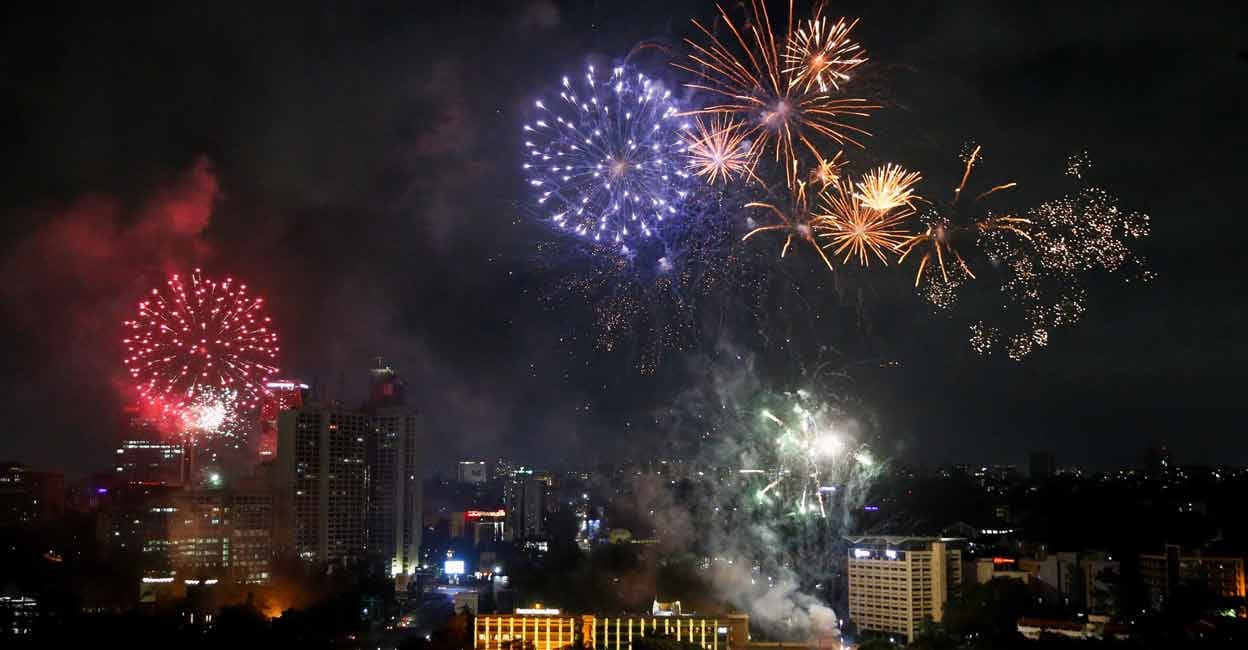
- After the mass: church bells, fireworks in the churchyard and the first slice of cake. The fireworks are loud and close, so keep children back from the compound wall.
Where the season is sold: Chalai, Connemara and Palayam
In Thiruvananthapuram the fortnight before Christmas is a market season as much as a church season. Chalai Bazaar, the long street market behind East Fort, sells the stars, crib figures and cake fruit; Connemara Market at Palayam sells the flowers and produce; and the cathedral precinct next door lights up with them. In Kochi, Broadway and the Ernakulam market play the same role.
Planning a Christmas Trip to Kerala: Where to Base and a 3-Day Itinerary
Base in Fort Kochi, give it three nights, and add Munnar or the backwaters only if you have a fourth day. Kerala in December rewards a tight plan: everything you came for sits within a fifteen-minute walk of the Basilica.
Where to base, and the trade-off each one carries
- Fort Kochi: the churches, the lights and the carnival on foot, at the highest room rates in the state. Right for first-timers.
- Ernakulam (Marine Drive and MG Road): chain hotels, easier bookings and a ten-minute ferry across. You give up the lanes at midnight and gain a room.
- Thrissur or Kottayam: the Christmas of Syrian Christian households, with fuller churches and no carnival. Right for anyone who wants mass over music.
The three-day plan
- 24 December, Christmas Eve. Reach Kochi by early afternoon and walk Mattancherry first: the Dutch Palace murals, Jew Town's spice warehouses and the Paradesi Synagogue (closed on Saturdays). Cross into Fort Kochi for the lights at dusk, eat early, and be at the Basilica by 10:30 pm.
- 25 December, Christmas Day. Appam and stew at your homestay, then Fort Kochi beach and the parade ground for the carnival's opening. The Chinese fishing nets at sunset, then Kathakali at the Kerala Kathakali Centre (make-up from 5 pm, performance at 6 pm).
- 26 December. Munnar, 130 km and about four hours east, for mist, tea estates and a cold night. Or Alappuzha, 55 km south, for a day on the backwaters. Come back for the carnival finale either way.
Booking windows, as of 21 October 2026
- Fort Kochi homestays and boutique hotels for 24 December to 1 January are usually full by mid-November.
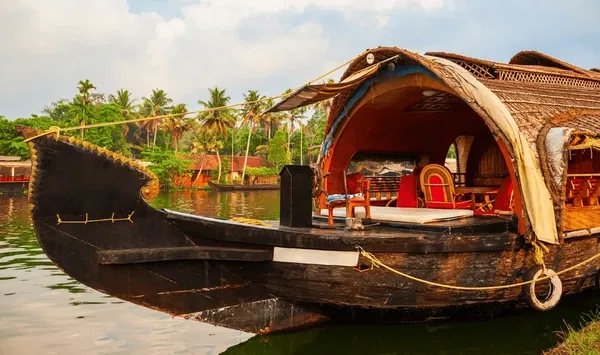
- Alappuzha houseboats for 31 December go first, often six to eight weeks out.
- Indian Railways opens reservations 60 days ahead; tickets for 23 and 24 December go on sale in the last week of October, and 3AC quotas from Bengaluru and Chennai fill within days.
- Christmas-week flights into Kochi from Delhi and Mumbai run well above November fares; book by the first week of November.
How to Reach Kochi for Christmas and Where to Stay
Fly into Kochi, cross by ferry, and sleep inside Fort Kochi if a room can still be had.
- By air: Cochin International Airport (COK) is 42 km from Fort Kochi, 60 to 90 minutes by prepaid taxi, roughly ₹1,300 to ₹1,700 in December. Thiruvananthapuram (TRV) serves the south; Kozhikode (CCJ) and Kannur (CNN) serve Thalassery and Malabar.
- By rail: Ernakulam Junction (ERS) and Ernakulam Town (ERN) are the Kochi stations. Fort Kochi is 12 km from ERS by road, or take an auto to the Ernakulam boat jetty and the public ferry across, the cheapest arrival and the best first sight of the quarter.
- Getting around: Fort Kochi is walked. Autos to Mattancherry run ₹60 to ₹100, Kochi Metro runs Aluva to Tripunithura, and ferries and Kochi Water Metro boats link the islands. On 31 December the roads into Fort Kochi close from the evening.
Christmas to New Year in Kerala: Making It One Trip
Between 25 December and 1 January, Kerala does not wind down; it changes gear. The churches empty into the carnival, and the crowd in Fort Kochi shifts from families to a younger, louder New Year audience.
- 26 to 30 December: carnival events every evening on the parade ground and the beach. The window for the Munnar or Alappuzha side trip, because Fort Kochi rates dip slightly between the two peaks.
- 31 December: the Pappanji burning. A giant effigy of an old man, standing for the year gone, is set alight at Vasco da Gama Square at midnight before a crowd in the tens of thousands. Roads into Fort Kochi close from the evening, so be inside the quarter by 8 pm. Kovalam and Varkala run the beach parties; Alappuzha houseboats sell New Year's Eve dinners on the water.
- 1 January 2027: the grand carnival procession, with the elephants, floats and bands, closes the season.
For the full picture of new year in Kerala, from the effigy in Fort Kochi to the beach parties in the south, our guide to new year celebration in Kerala covers the 31 December logistics.
If you would rather arrive with the Christmas-week rooms and transfers already settled, our Kerala tour packages run through December and hold the inventory that sells out first.