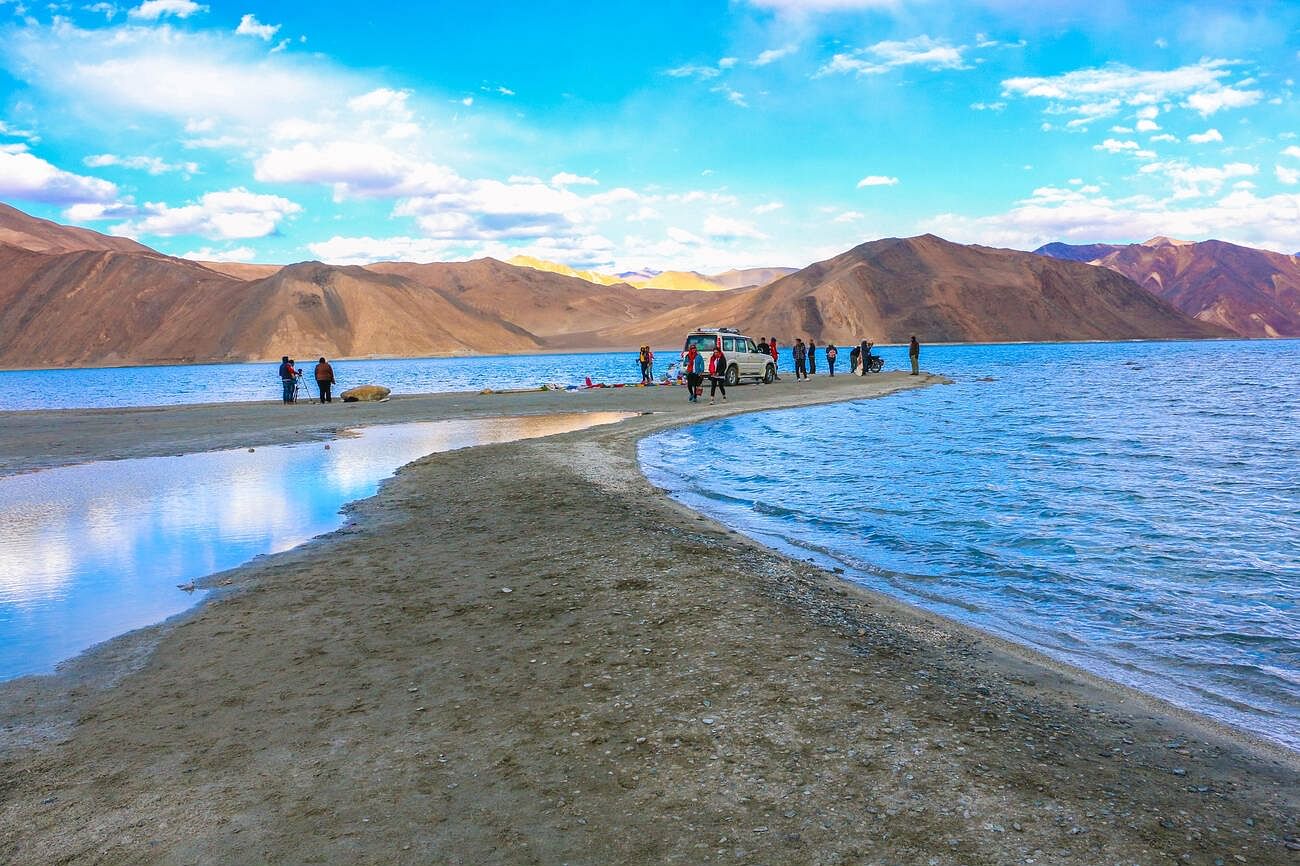
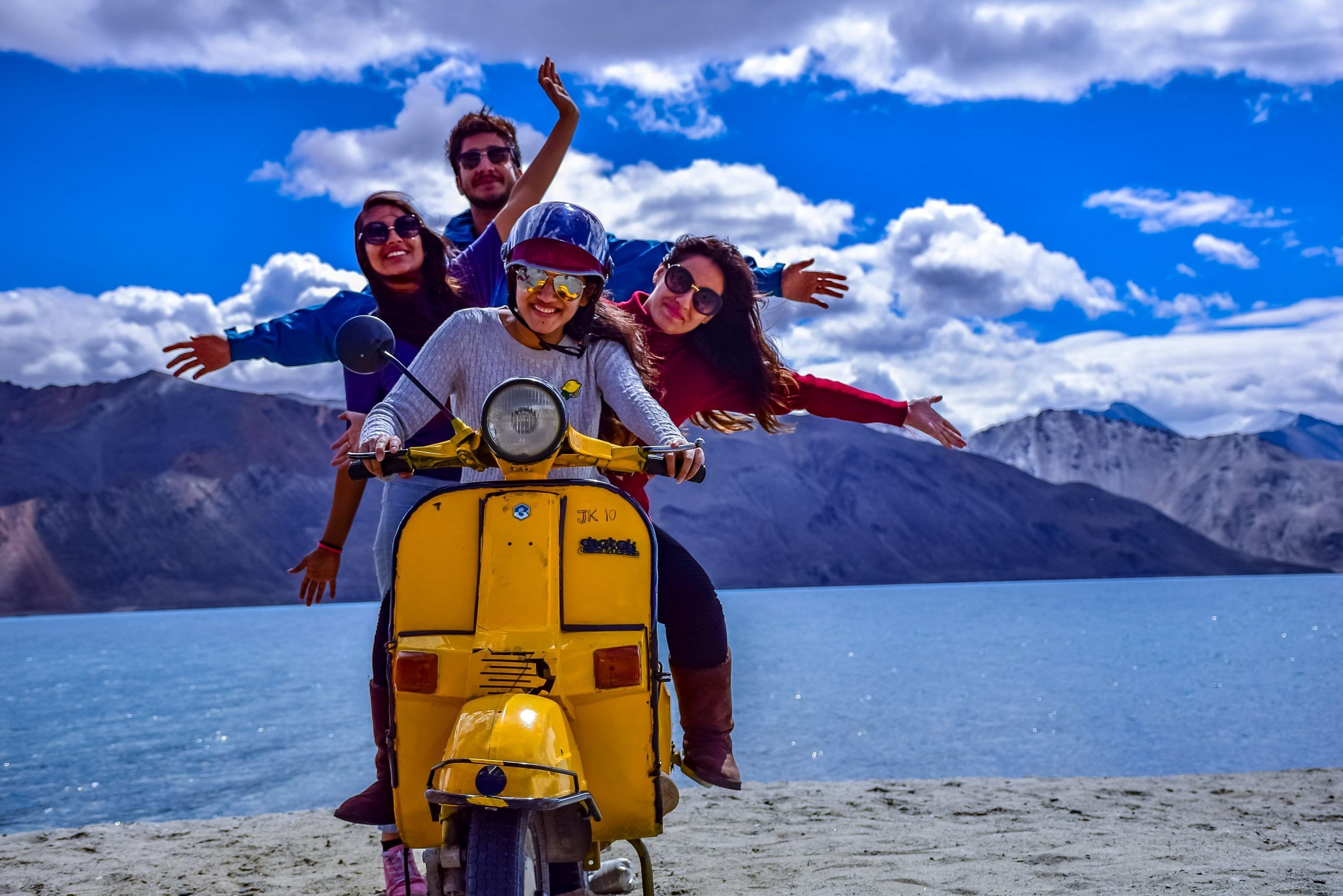
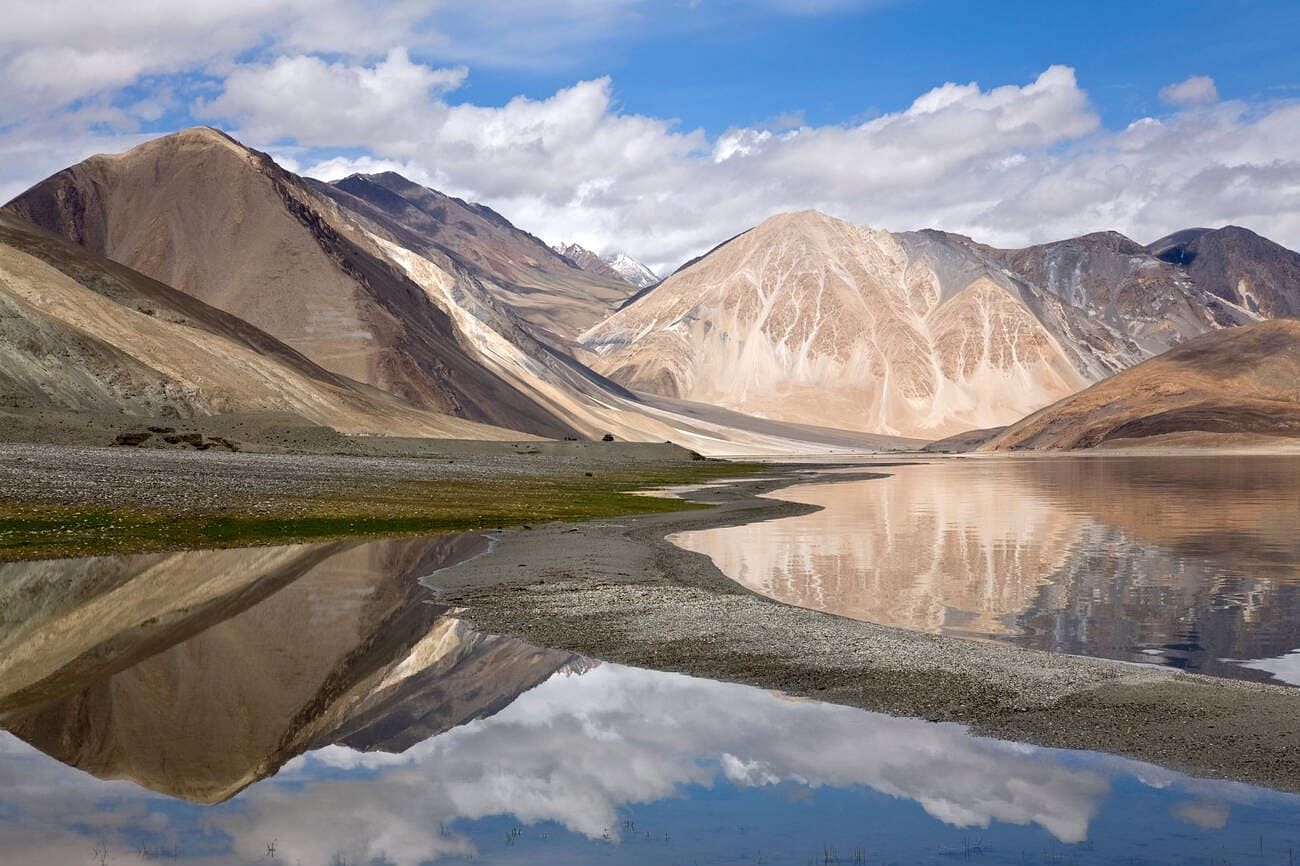
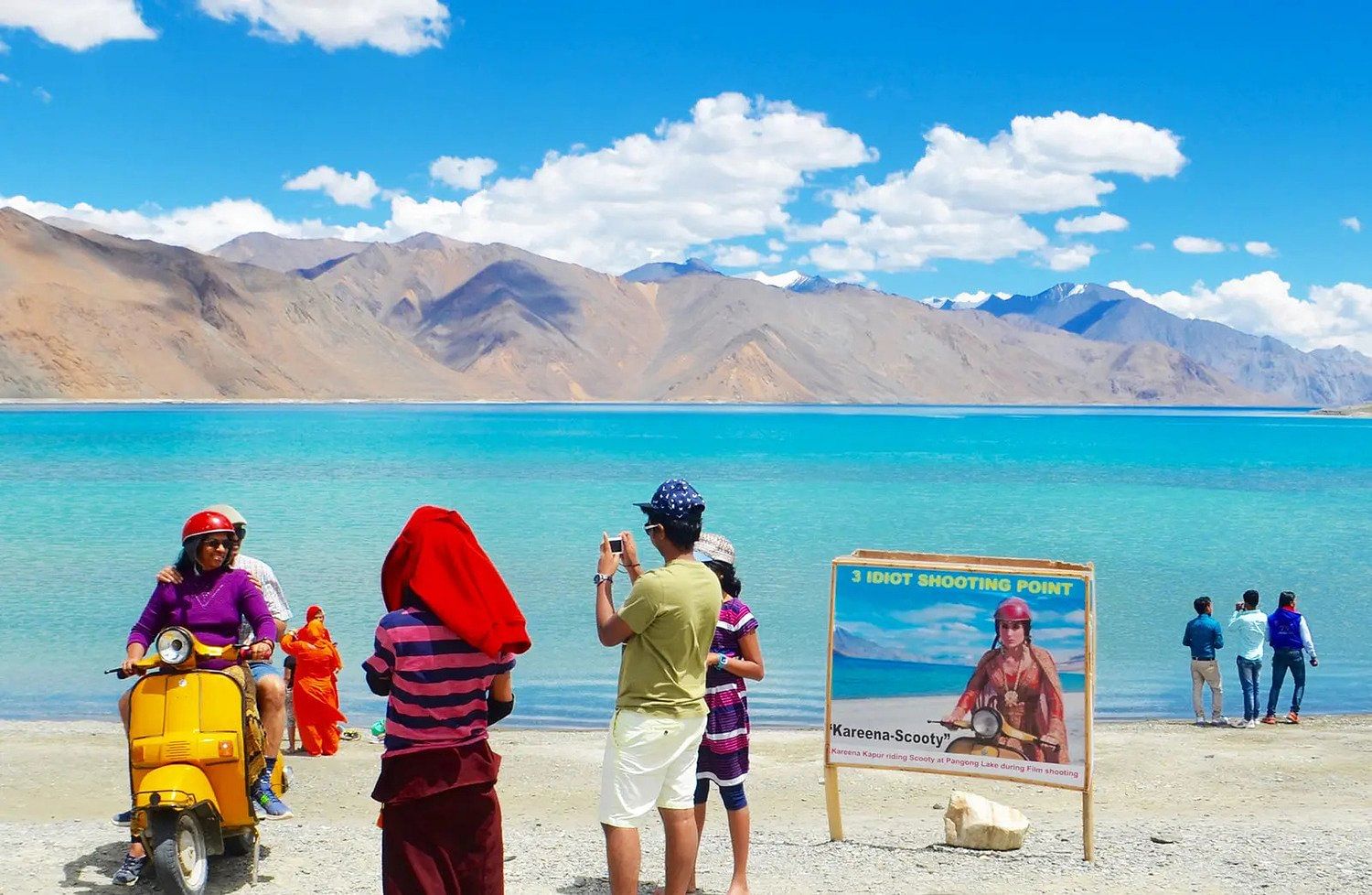
Pangong Tso is Ladakh's highest and most-photographed lake, a 134 km stretch of colour-shifting saline water sitting at 4,350 metres in the far east of the region. The name has been in Indian travel vocabulary since 3 Idiots put the yellow scooter and the frozen lakefront on every Bollywood screen in 2009, but the lake was drawing serious travellers long before the film.
What most first-time visitors underestimate is how much of Pangong's story sits beyond the postcard shot: the road in over Chang La, the altitude reality at 4,350 metres, the permit process, the lakefront villages that turn from sleepy hamlets to camp settlements every summer, and the specific two-night decision that separates a rushed day trip from a proper Pangong experience. The lake is best admired from its shore, as swimming and wading are not permitted, a rule that protects its fragile waters and spares visitors from water that stays close to freezing at this altitude.
This pillar guide covers everything a Ladakh traveller needs to know about visiting Pangong: the essential logistics, the permit process, the drive itself, where to stay, how to handle the altitude, when to go, and how to fit Pangong into a wider Ladakh trip. All fees, permit process details and price bands are worth reconfirming with LAHDC or your operator closer to your travel window, as rates and portal processes are updated periodically.
If you're planning the lake as part of a structured itinerary, WanderOn’s Leh Ladakh tour packages can also help you combine Pangong with other key destinations without having to manage every transfer independently.
The essential picture you need to know about Pangong Tso Ladakh before we go into logistics:
Timings, fees and permit process details should be reconfirmed at the time of application, as the local administration updates them periodically.
Pangong Lake Permit: What You Actually Need
Pangong Tso sits within Ladakh's restricted-area zone, which means every traveller needs a Pangong Lake permit before crossing Chang La. The permit type depends on your nationality.
For Indian travellers: An Inner Line Permit (ILP) is no longer required for Indian travellers visiting Pangong Lake. Instead, travellers need to complete the required registration and pay the applicable environmental/green fee, Red Cross Fund contribution and wildlife fee through the official Leh Tourist Management System. The payment can be made online, and the receipt/payment slip can be carried as a PDF or hard copy for checking at designated checkpoints.
For foreign nationals: Pangong Lake falls within Ladakh's protected/restricted-area framework. Foreign travellers who require a Protected Area Permit (PAP) must follow the applicable PAP process through an authorised/registered travel agent. The exact requirements can vary by nationality and passport type; the official LAHDC portal specifically lists additional clearance requirements for certain nationalities and passport categories.
Checkpoints along the way: Carry your permit/payment slip and identification documents in an easily accessible form. The official LAHDC system states that the payment slip is checked at the relevant check posts. Document checks can take place at designated checkpoints along the Pangong route.
Fee structure: The applicable tourist fee for Pangong includes a ₹400 environmental/green fee per person, ₹20 wildlife fee per person per day and a ₹50 Red Cross Fund contribution. For a 7-day trip, this works out to ₹590 per person if the Red Cross contribution is included. Pay through the official LAHDC Leh Tourist Management System, and check the final amount shown on the portal before payment as Ladakh's fee structure can be revised.
Getting There: Leh to Pangong via Chang La
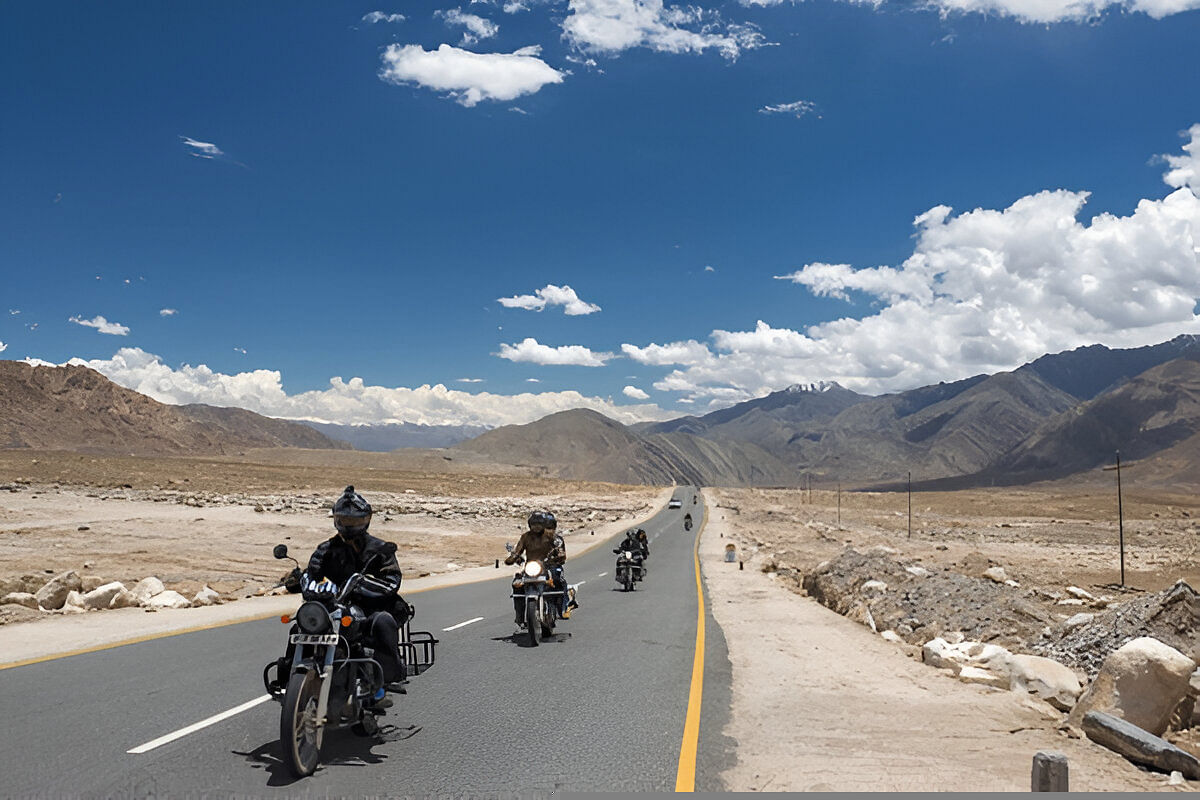
The Leh to Pangong road trip is one of the most memorable drives in Ladakh, running roughly 160 kilometres through Chang La pass and across the changing terrain of the Changthang plateau. The full route runs Leh to Karu to Sakti to Chang La to Durbuk to Tangtse to Lukung, taking 5 to 6 hours in a private vehicle with sightseeing stops factored in.
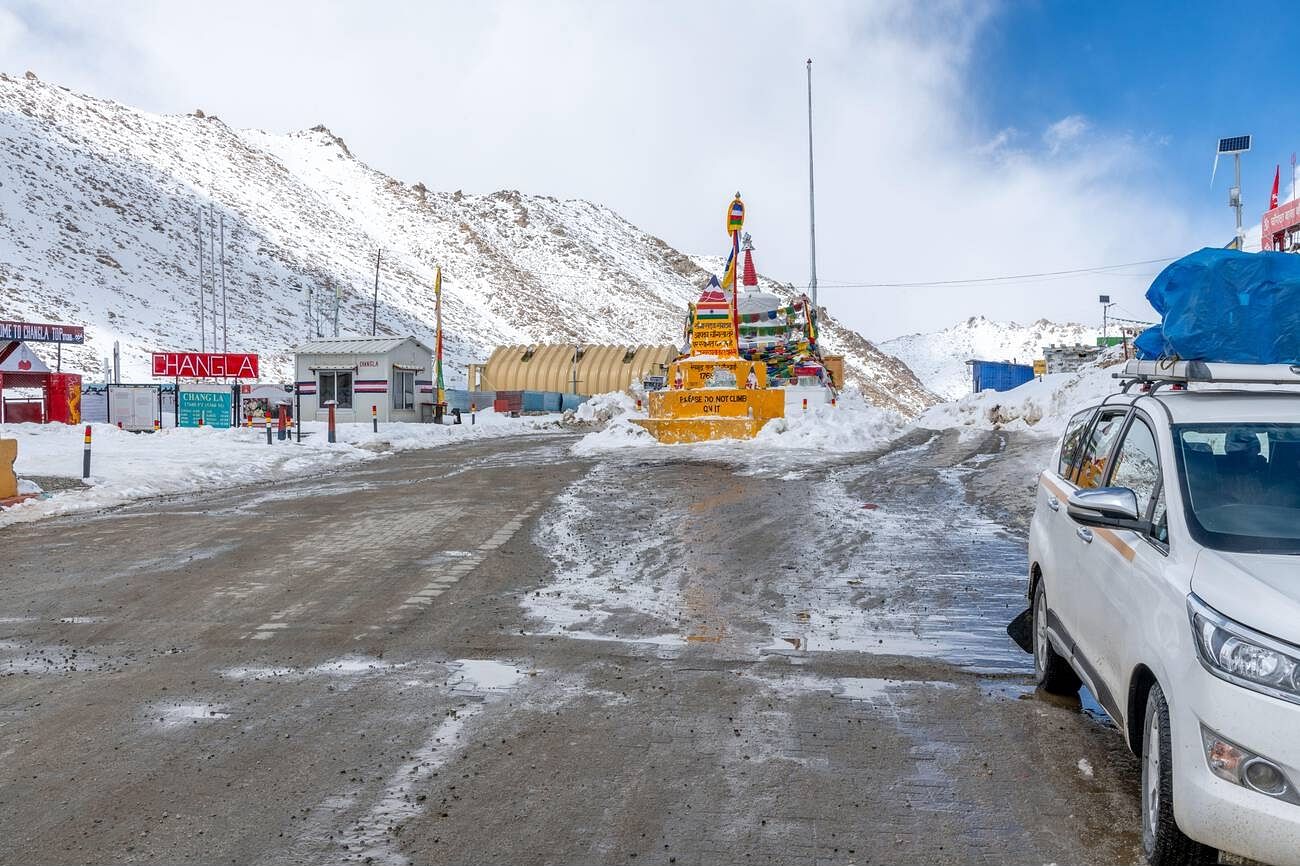
The pass itself: Chang La sits at 5,360 metres and is one of the highest motorable passes in the world. The summit is marked with a small temple and a canteen run by the Indian Army, where hot tea and biscuits keep travellers warm during the short stop at altitude. Don't linger too long at the top, since sustained altitude exposure at 5,360 metres can bring on headaches even in acclimatised travellers.
Road condition: The Leh-Pangong road is generally in decent condition through the peak season, with some rougher stretches near the pass and occasional patches where landslides or snowmelt have affected the tarmac. BRO maintains the route through the summer months, although occasional snowfall can cause road blockages, so keep 1-2 days in buffer. Confirm current road status with your operator or local sources 48 hours before departure.
Fuel warning: The last reliable fuel stop is at Karu, roughly 40 km east of Leh. Beyond Karu, there is no petrol pump on the direct route to Pangong. Fill up at Karu on the outbound leg and again on the return, and carry a small reserve if you're on a motorcycle.
Shared vs private taxi economics: Shared taxis and shared trips to Pangong are a budget-friendly option for solo travellers, although availability and departure arrangements can vary by season. A 2-day shared Pangong trip at around ₹2,500–₹3,500 per person. Private taxis offer more flexibility and typically cost around ₹11,800–₹13,700 per vehicle for a standard 2-day Leh–Pangong–Leh trip, depending on the vehicle category. These rates are based on current Ladakh Taxi Union rate references and should be reconfirmed with the Leh Taxi Union or your registered operator before booking.
The Nubra to Pangong Shyok route: For travellers combining Nubra Valley and Pangong on the same trip, the Shyok route offers an alternative to returning via Leh. The road from Nubra to Pangong runs via the Shyok river valley, and while it has been improving over the years, sections still see periodic closures due to river-level changes and weather. When open, it saves a full day of backtracking and turns the trip into a natural loop. Confirm current Shyok route status closer to travel, as accessibility varies year to year.
Staying at Pangong: Spangmik, Man and Merak
The one-night thesis. Day-trippers who drive to Pangong from Leh and back in a single day cover roughly 12 hours of driving to spend around 30 minutes at the lake itself, which is a lot of road for a fleeting look. An overnight stay at one of the lakefront villages transforms the experience — you get sunset, night skies at 4,350 metres, and the dawn moment when the lake shifts from black to indigo to turquoise as the sun rises over the ridges. This is the payoff that day-trippers miss.
The three lakefront villages.
Spangmik Village is the most-visited of the three and sits closest to the Lukung checkpoint. It has the most camp options and is where most first-time visitors stay.
Man sits further along the shore and offers a quieter setting with fewer camps.
Merak is the furthest accessible village on the Indian side of the lake, and it's the choice for travellers wanting the least commercial experience.
Camp and homestay options: Stays near Pangong Lake range from basic tented camps to more comfortable wooden cottages and semi-permanent Swiss tents. Price bands typically run ₹1,000 to ₹6,500 per person per night depending on the property tier and season, though rates should be verified directly with the operator at the time of booking as they shift with demand.
What to expect from the accommodation: The lakefront properties are designed for travellers who value the location above conventional hotel amenities. Some camps operate with shared bathroom facilities and limited running water, particularly at the more basic tier, since the ecosystem constraints of a 4,350-metre lakefront don't support full plumbing at every property. Comfortable options with attached bathrooms and full amenities exist at the higher price bands. Choose the tier that matches your travel style, and confirm exact facility details with the property before booking.
Nights are cold: Even in peak summer, night temperatures at Pangong drop close to freezing, and shoulder-season nights can go well below zero. Camps provide layered bedding and hot water for morning use, but bring a good insulated jacket, thermals and a warm hat regardless of when you're travelling.
No wild camping: Setting up your own tent along the Pangong shore is not permitted. All overnight stays go through licensed camps and homestays, which is the arrangement the local administration has put in place to protect the fragile lakeshore ecosystem.
Altitude: Respect the 4,350 m
Pangong sits at 4,350 metres, and the altitude reality here is genuinely serious. Acute Mountain Sickness (AMS) at this elevation is a real risk for travellers who haven't acclimatised properly, and the protocol below matters as much as any other part of the trip planning.
Two full nights in Leh first: The single most important acclimatisation rule for Pangong is to spend at least two full nights in Leh (at 3,500 metres) before heading to the lake. This gives your body time to adjust to the initial altitude before the further ascent through Chang La to Pangong. Travellers who fly into Leh and try to visit Pangong on day 2 disproportionately experience AMS symptoms on the drive or overnight at the lake.
Hydration is non-negotiable: Drink 3 to 4 litres of water per day starting from your arrival in Leh, and maintain this through the Pangong trip. Altitude accelerates dehydration, and dehydration is one of the biggest AMS triggers.
No alcohol: Skip alcohol from arrival in Leh through your Pangong return. Alcohol worsens dehydration and dampens your body's ability to acclimatise.
Watch for symptoms: Mild AMS symptoms include persistent headache, nausea, fatigue, disturbed sleep and loss of appetite. Rest and hydration typically resolve mild cases. More serious symptoms include vomiting that continues past 12 hours, severe headache that doesn't respond to paracetamol, difficulty breathing at rest, confusion, or loss of coordination.
The turn-back call: If severe symptoms appear at Pangong itself, the right response is to descend immediately to lower altitude. Do not wait it out at the lake. Descending to Leh or even to Tangtse (which sits lower than the lakefront villages) usually resolves symptoms quickly. Camps and homestays at Pangong have limited emergency infrastructure, and no dedicated hospital operates at the lake.
Carry basics: Diamox (acetazolamide) is a widely used preventive that many travellers start 24 hours before altitude ascent and continue for 2 to 3 days. Check with your doctor before travel because of side effects and potential contraindications. Also carry paracetamol, ORS sachets, and a portable oxygen canister if you're travelling independently rather than with an operator that supplies these.
May to September: the classic window. May through September is the peak season for Pangong, when the lake is at its most vibrant, all roads are open, and camps are fully operational. Best time to visit pangong tso specifically for the colour-show months falls in June, July and August, when the water shifts through the widest range of blues and turquoise depending on the angle of light and the sky above. Pangong lake temperature during peak season runs from 5°C to 15°C during the day and drops close to freezing at night.
The monthly texture.
May: the season opens as Chang La clears. Water levels are lower and the lake takes on lighter shades. Fewer crowds.
June to August: peak visitor months with the fullest colour show and the most camps operational. Book accommodation well in advance.
September: the sweet spot for photography, with clearer skies, thinner crowds and the strongest golden light of the year.
October: shoulder honesty. October is a genuine shoulder window at Pangong. Camps begin winding down operations toward mid to late October as temperatures drop, and access can be affected by early snowfall at Chang La. Travellers heading in October should confirm camp availability and road conditions directly with operators, and pack for genuinely cold weather.
The frozen-lake window (January and February): Pangong freezes solid through the deep winter months, and the frozen spectacle draws a specific kind of specialised traveller. Getting there in January or February involves cold temperatures, limited accommodation (as most camps are seasonal), and challenging logistics that only established winter operators can handle safely. It's a specialised experience suited for experienced travellers with proper cold-weather preparation and professional operator support. For the wider seasonal picture across Ladakh, see our best time to visit Ladakh guide.
Fitting Pangong into Your Ladakh Trip
Pangong is rarely the whole trip: It's a two to three-day chapter within a wider Ladakh itinerary, and the sequencing matters for both experience and altitude adjustment.
The standard loop: Leh, Nubra, Pangong, Leh. This is the classic Ladakh sequence that most operators run. After 2 to 3 nights in Leh for acclimatisation, travellers head north to Nubra Valley via Khardung La for 1 to 2 nights, then cross via the Shyok route (when open) directly to Pangong for another 1 to 2 nights, then return to Leh. This structure keeps travellers moving forward and cuts a full day of backtracking.
The alternative: Leh, Pangong, Leh, Nubra, Leh. For departures when the Shyok route is closed, the standard sequence becomes Leh-Pangong-Leh followed by Leh-Nubra-Leh as separate legs. It adds a day but works reliably regardless of Shyok conditions.
How many days for pangong tso? Two full days including one overnight is the honest minimum for a proper Pangong experience with sunset, night sky and dawn at the lake. Three days makes it more relaxed and gives buffer for weather. One-day return trips from Leh technically work but sacrifice most of what makes the trip worth doing.
How to reach Ladakh from Delhi: For travellers still finalising the logistics of reaching Ladakh in the first place, our how to reach Ladakh from Delhi guide covers the flight, road and combination routes into Leh with honest pros and cons for each.
Trips built around Pangong: For a structured Ladakh trip with Pangong sequenced properly alongside Leh acclimatisation and Nubra Valley, our Ladakh tour packages run through the May to September peak window with the classic Srinagar-in, Manali-out road loop and dedicated Leh acclimatisation days built in.