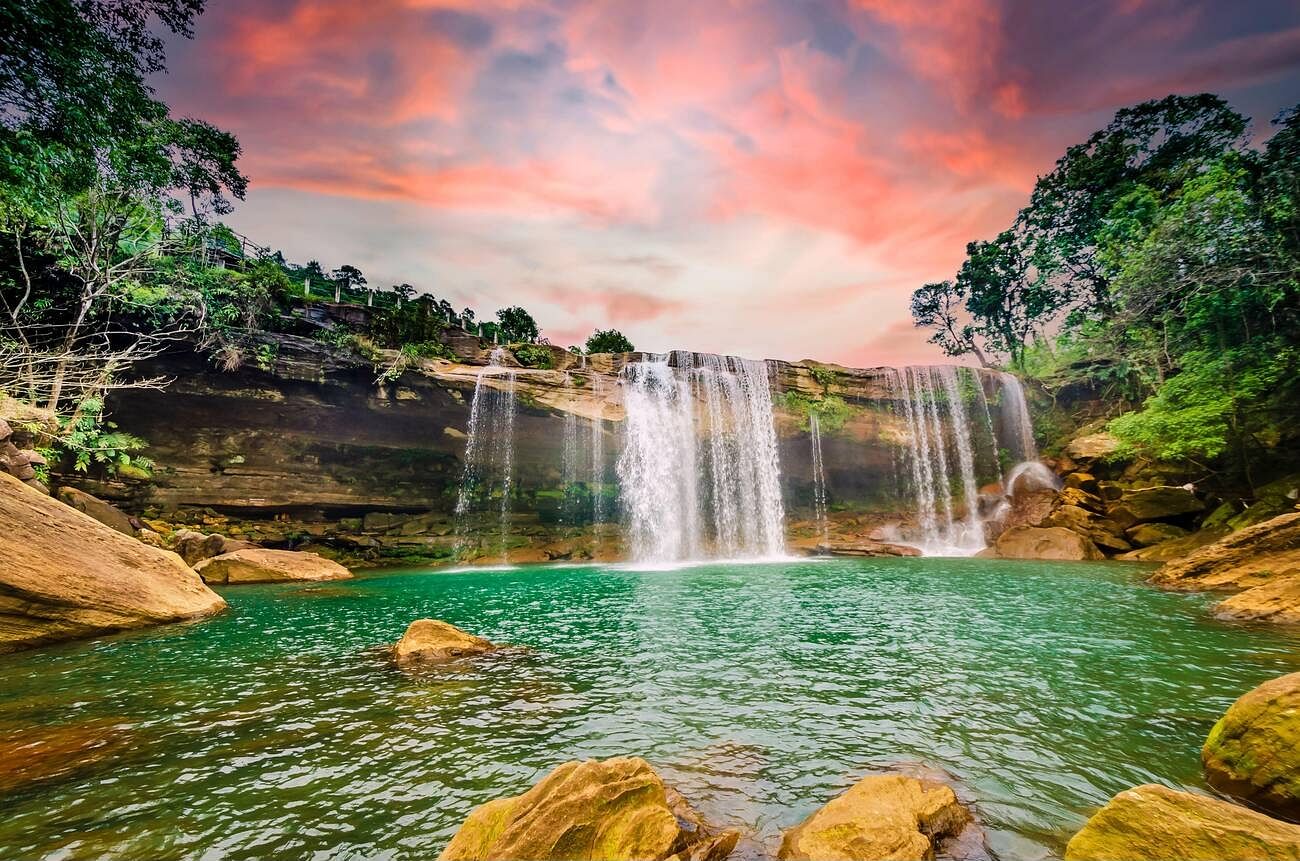
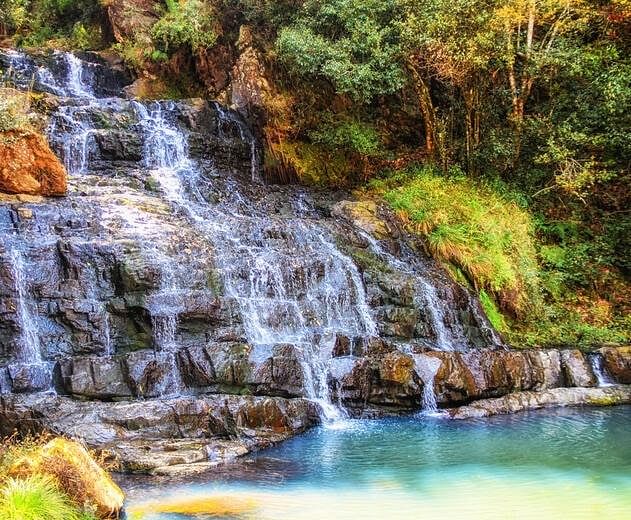
If you’re planning Krang Suri Falls is the waterfall people come to the Jaintia Hills for: a white curtain of water dropping into a deep, startlingly blue pool ringed by forest and rock, near Amlarem in the West Jaintia Hills, about 30 km south of Jowai. You can swim in it, which is rare for a Meghalaya waterfall, and that is a big part of the draw.
Go to Krang Suri between October and April, arrive by early afternoon, rent a jacket and get in the water. That swim in the blue pool is the memory most travellers bring home from the Jaintia Hills. Pair it with Phe Phe for a full day, and let our Jowai tour packages handle the driving, timing and stops.
This guide covers what searchers actually want: the current entry fee, how swimming works, when the water is at its bluest and how to get there. Fees and timings were checked on 23 October 2026 against the most recent visitor reports, and they change, so confirm at the gate.
most popular meghalaya trip packages
Why Krang Suri Is Jaintia Hills' Most Loved Waterfall
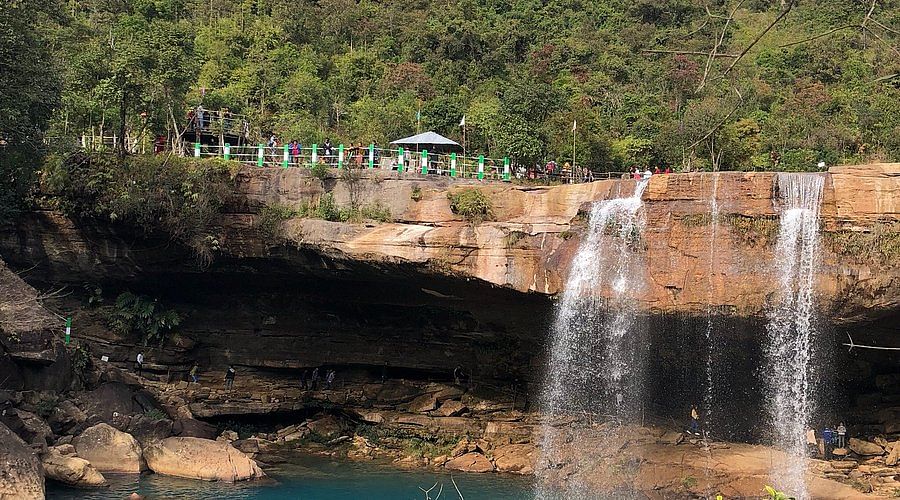
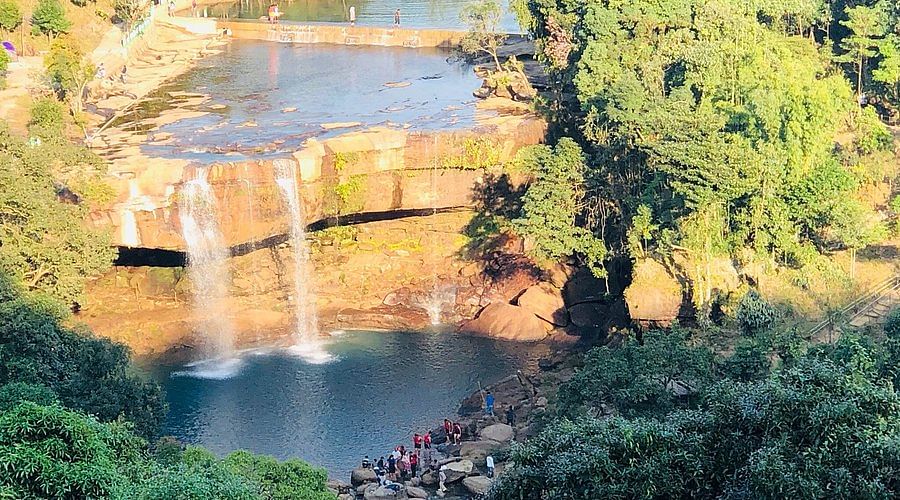
Most of Meghalaya's famous falls are viewed from a railing at the top of a gorge. Krang Suri is different: you walk down through the forest and arrive at water level, beside a pool clear enough to see the rocks far below the surface. In the dry months the water turns a vivid turquoise, the falls split into several streams over a dark rock face, and spray drifts across the pool. Some guides also mention a path behind part of the water curtain. Recent visitors don't describe it, so ask the staff whether it is open and safe before you try it.
Come in the early afternoon if you can. By 2 or 3 pm the light slants through the trees, catches the spray and turns the pool almost jewel-bright, and the morning crowds from Jowai have often thinned. Plan to leave the pool by about 4.30 pm, since the gate closes around 5 pm. Among the waterfalls in Jaintia Hills, it is the one that rewards lingering rather than a quick photo.
Krang Suri Falls Entry Fee, Timings and Facilities
The short answer: the Krang Suri Falls entry fee is ₹50 per person, and the gate admits visitors from about 9 am to 5 pm daily. These figures come from a September 2026 visitor report and match earlier reports from 2024. Some older listings still show ₹40 and 7 am to 6 pm, so treat those as out of date.
Carry cash. Small counters and stalls here may not take cards, and mobile signal can be patchy for UPI.
Swimming at Krang Suri: How It Works
Yes, you can swim. Swimming at Krang Suri Falls is the reason many people make the trip, and a few rules keep it safe.
• Life jackets are required. Visitors consistently report that a life jacket is compulsory to enter the pool, and jackets are rented at the falls. Wear one even if you are a strong swimmer.
• The pool is deep. The water near the falls is far deeper than it looks through the clear water. Non-swimmers should stay close to the edge with their jacket on.
• Swim where the staff allow. Stay in the designated swimming area and keep away from the base of the falls, where the falling water churns.
• The water is cold. Even on a sunny day it is bracing, and in winter it is very cold. Get in gradually, and get out if you start shivering.
• The rocks are slippery. Algae makes the rocks around the pool slick. Enter and exit carefully, in water shoes if you have them.
• Monsoon changes everything. After heavy rain the current can be strong and swimming may be stopped. Follow the staff on the day.
Handled sensibly, a swim here is the highlight of a Jaintia Hills trip.
If You Would Rather Not Swim
Plenty of visitors never get in, and the falls still repay the trip. Sit on the rocks at the edge of the pool and watch the spray drift across the water, or take in the whole drop from the viewpoint part-way down the steps. If boating is running on the day, a short ride brings you closer to the curtain without getting wet beyond the spray. Children who don't want to swim can paddle at the shallow edge in a life jacket, with an adult close by.
When the Water Turns Blue: Best Time To Visit Krang Suri Falls
The famous Krang Suri blue water is a dry-season sight. From about October to April, the stream runs low and clear over the rock, so the deep pool shows its turquoise colour. Clear water over a deep pool absorbs red light and reflects blue, and minerals from the rock are often credited too.
In the monsoon, from June to September, the falls change character. Volume rises, the cascade turns into a roar, and silt washed down from the hills turns the pool greener or murkier. The falls are at their most powerful, but swimming is often unsafe and the steps are slick.
For more on the wet months, see our guide to monsoon in Meghalaya.
Photographing the Blue Pool
The turquoise shows best when sunlight reaches the water. From late morning into the early afternoon the sun usually clears the trees around the pool, while early in the day the water can sit in shade and look darker. A polarising filter, or simply changing your angle so you are not shooting into the glare, cuts the surface reflection and brings out the colour. Keep your phone in a pouch near the falls, since the spray carries, and stop at the viewpoint on the way down for a shot of the full drop.
The Walk Down: From Parking to the Pool
From the parking area, a paved path and stone steps with railings lead down through the forest to the falls. Expect about 15 to 20 minutes down and 20 to 25 minutes back up. Visitor estimates range from about 200 to over 350 steps, depending on the route; a viewpoint part-way down gives you a first look at the falls from above.
The effort is moderate. Most fit adults and children manage it easily, but the climb back is steady, and older visitors should take it slowly with rests. It is not wheelchair accessible. The steps get slippery after rain and near the pool, so wear shoes with grip, not flip-flops.
Tips for Families and Older Travellers
Take the descent slowly and use the rails, because the climb back up is the harder half. Carry water for it, and rest on the way rather than pushing through. Agree a meeting point at the top before anyone heads down, since mobile signal can drop near the pool. Put children in life jackets as soon as they reach the water's edge, not only once they are in the pool.
How to Reach Krang Suri from Jowai and Shillong
Krang Suri lies near Amlarem, south of Jowai, the headquarters of the West Jaintia Hills.
• Jowai to Krang Suri: about 30 km towards Amlarem, which most drivers cover in roughly 45 minutes to an hour, depending on traffic and road works. Jowai is the natural base, with the most hotels and taxis in the area.
• From Shillong: about 85 to 90 km, roughly 3 hours via Jowai and Amlarem. Heavy trucks on the Shillong-Jowai highway can slow weekday travel, so allow extra time.
• By public transport: shared taxis run from Shillong to Jowai. From Jowai, hire a local taxi for the round trip, since shared transport to the falls is limited. Agree the waiting time and fare first.
• From Guwahati: about 180 km, along the Guwahati to Shillong road. Most people break the journey in Shillong or drive straight through to Jowai.
A hired cab for the day is the simplest option, especially if you are pairing the falls with Phe Phe.
Stops on the Shillong-Jowai Road
If you are driving from Shillong, a few sights on or near the highway break the journey well. Our Jaintia Hills guide, linked below, covers them in more depth.
• Thadlaskein Lake, about 20 km before Jowai off NH44. Local tradition says warriors dug it with their battle-bows to mark a chieftain's departure from the Jaintia kingdom. A 2026 listing gives an entry fee of about ₹20.
• Nartiang Monoliths, in Nartiang village, said to hold the largest collection of megalithic stones in Asia. It sits off the main highway, so agree the detour with your driver.
• Tyrshi Falls, about 5 km from Jowai on the Shillong-Jowai highway, where the water drops in tiers into a milky white pool.
Pick one rather than all three if you want to reach Krang Suri with time for a swim.
Staying in Jowai or Near the Falls
Jowai, the headquarters of the West Jaintia Hills, is the practical base, about 1.5 to 2 hours from Shillong by road. A night there turns Krang Suri and Phe Phe into an easy day rather than a rush, and leaves time for the town itself; our guide to things to do in Jowai covers the rest. If you want to sleep close to the water, Meghalaya Tourism lists Krangshuri Homestay & Camping on Krangshuri Road in Amlarem. Rooms near the falls are few, so book ahead and confirm what is included. If you are in Jowai in July, ask about Behdeinkhlam, the Jaintia festival celebrated at Syntu Ksiar near the town.
The Perfect Jaintia Hills Day: Krang Suri with Phe Phe
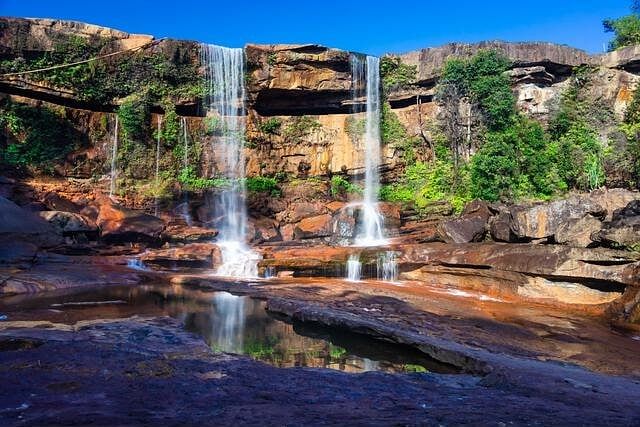
Krang Suri and Phe Phe Falls pair naturally, and Meghalaya Tourism lists them as neighbouring sights. Phe Phe is a two-tiered fall with its own blue pools near Shkentalang village, about 22 km from Jowai, reached by a 15 to 20 minute forest hike with some scrambling. Meghalaya Tourism suggests going with a local guide.
A good shape for the day from Jowai:
1. Morning: leave Jowai by 8 am for Phe Phe, when the trail is cool and quiet. Allow about two hours, including the drive and time at the pools; treat this as a suggestion rather than a fixed schedule.
2. Lunch: eat at the stalls by the Krang Suri parking area, or carry a packed lunch from Jowai, where restaurants are easier to find.
3. Afternoon: reach Krang Suri by about 1 pm for a swim and the softer afternoon light, and start back up the steps by 4.30 pm so you are out before the 5 pm close.
From Shillong, the day is long but doable with an early start. To have the driving and timing handled, look at our Jowai tour packages, which build both falls into Jaintia Hills day plans. For more stops in the region, see our list of places to visit in Jaintia Hills.
With a night in Jowai, the pace eases. On day one, drive from Shillong with a stop at Thadlaskein Lake or Nartiang, check in, and spend the afternoon at Krang Suri. On day two, walk to Phe Phe in the cool of the morning, then stop at Tyrshi Falls on the drive back to Shillong.
Swimwear and a quick-dry towel. Pack a change of clothes; there are changing rooms near the pool.
• A dry bag or waterproof pouch for your phone. Spray reaches far beyond the pool.
• Water shoes or sandals with grip. For the slippery rocks and the steps.
• Cash. For entry, parking, life jackets and the stalls.
• A light layer. You will be cold after a swim, even in summer.
• Water and snacks, especially with children or older travellers.
• A bag for your rubbish. Carry out everything you bring in.
Krang Suri is one of the most rewarding of the scenic waterfalls in Meghalaya, and the rare one you can swim in. To build it into a longer trip, see our Meghalaya tour packages.
Read more: Thadlaskein Lake · Umngot River · Laitlum Canyon