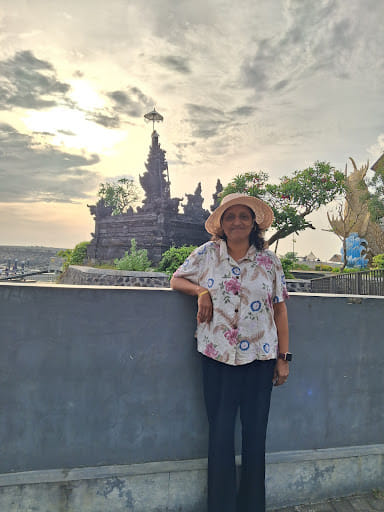
Get your Lempuyang Temple is famous for one photograph: a split stone gate framing Mount Agung, with what looks like a still lake at its feet. What it doesn't show is the queue, the mirror held under the phone, or the six other temples on the mountain behind it. This guide explains how the queue works today, how to time your visit, and why the trip is still worth the early alarm. Our undefined Bali tour packages can plan the early start for you.
Fees, shuttle prices and the queue system were checked on 26 October 2026 against visitor guides updated in August to October 2026. They are set locally and change, so carry cash and treat the figures as approximate.
What Lempuyang Temple Actually Is
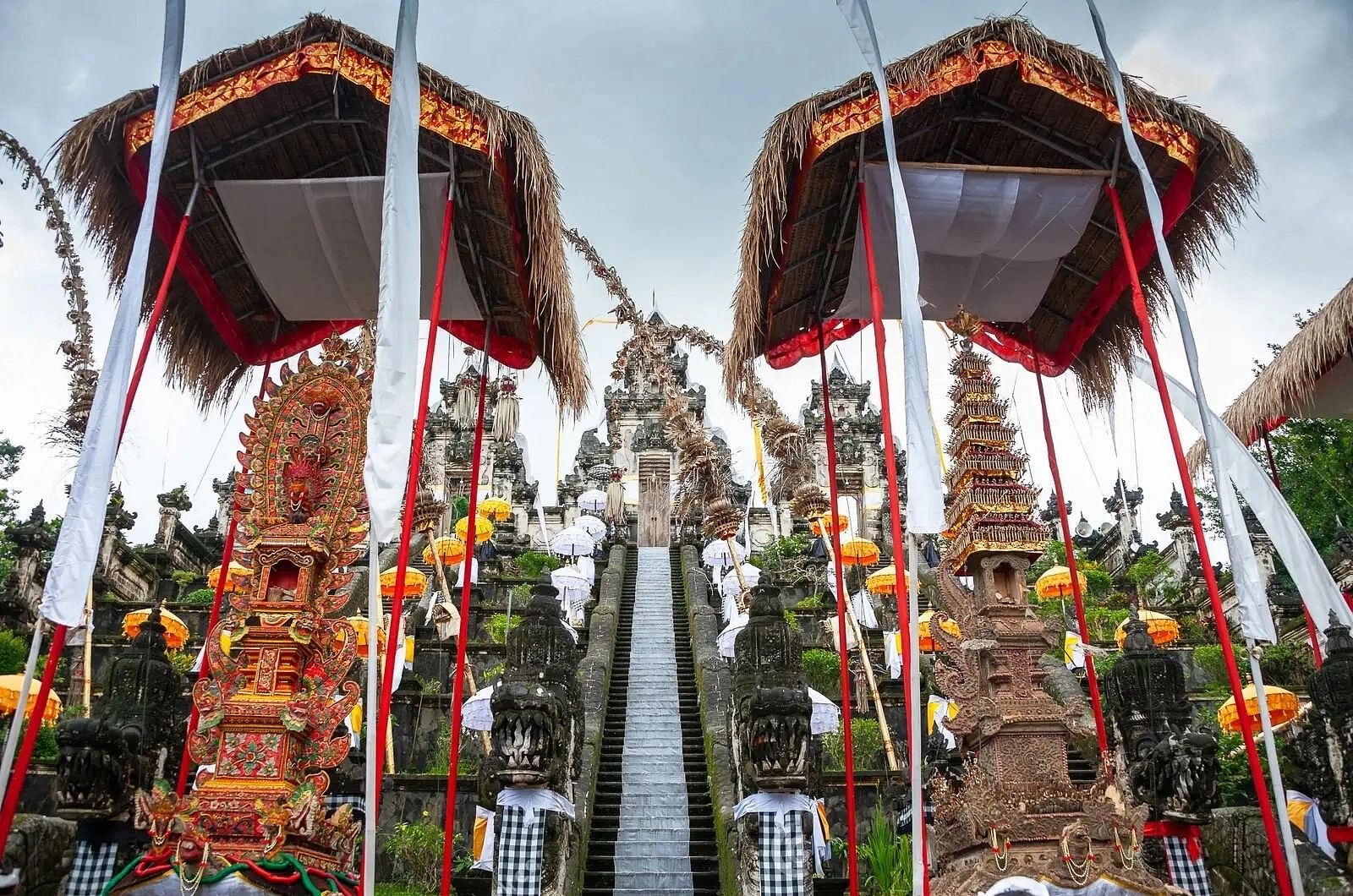
Lempuyang is one of Bali's holiest sites, not a photo set. It is one of the island's sad kahyangan, or directional temples, the small group of sanctuaries that guard Bali from each point of the compass. Lempuyang guards the east and is dedicated to Hyang Iswara, the god associated with that direction. Balinese Hindus from across the island come here to pray.
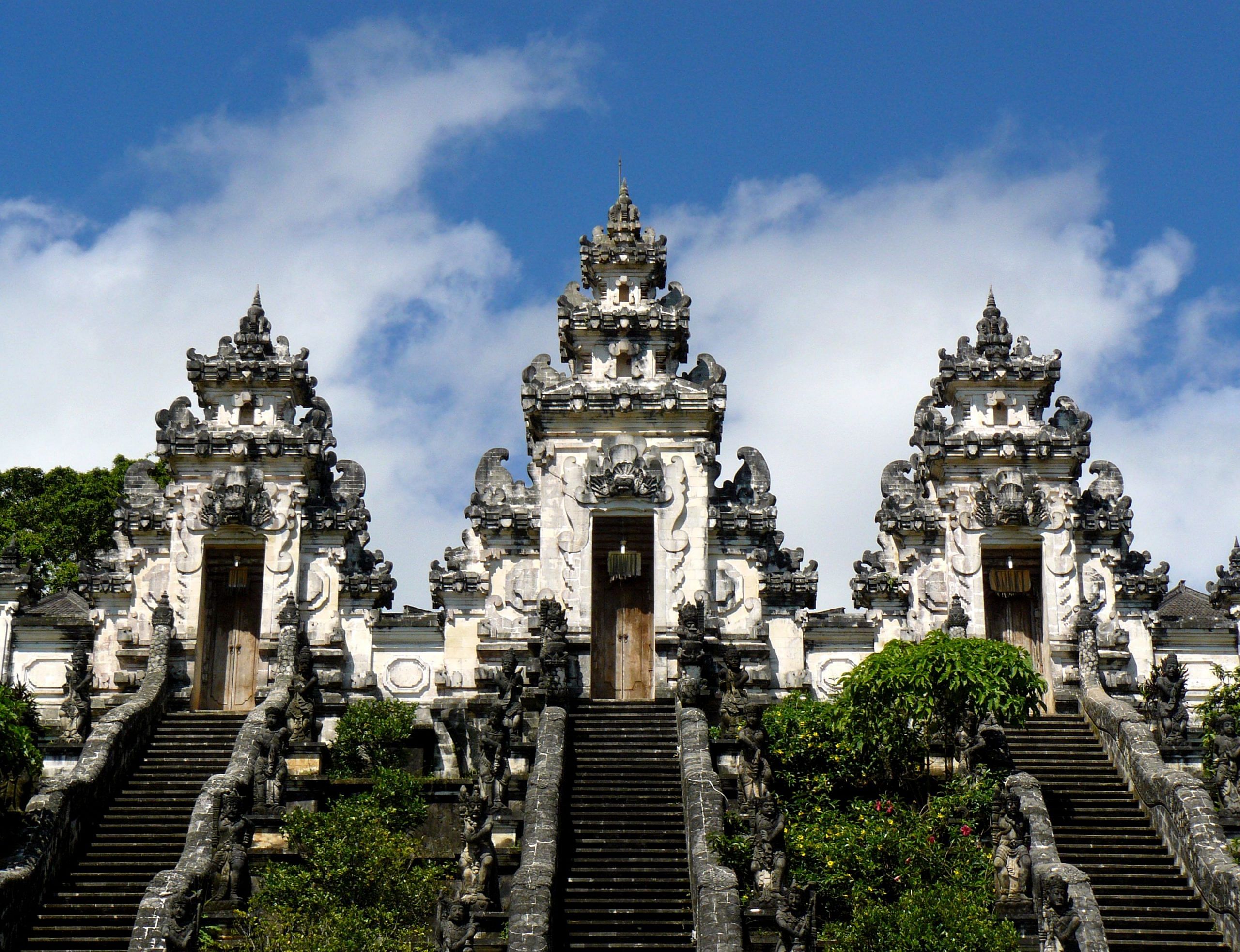
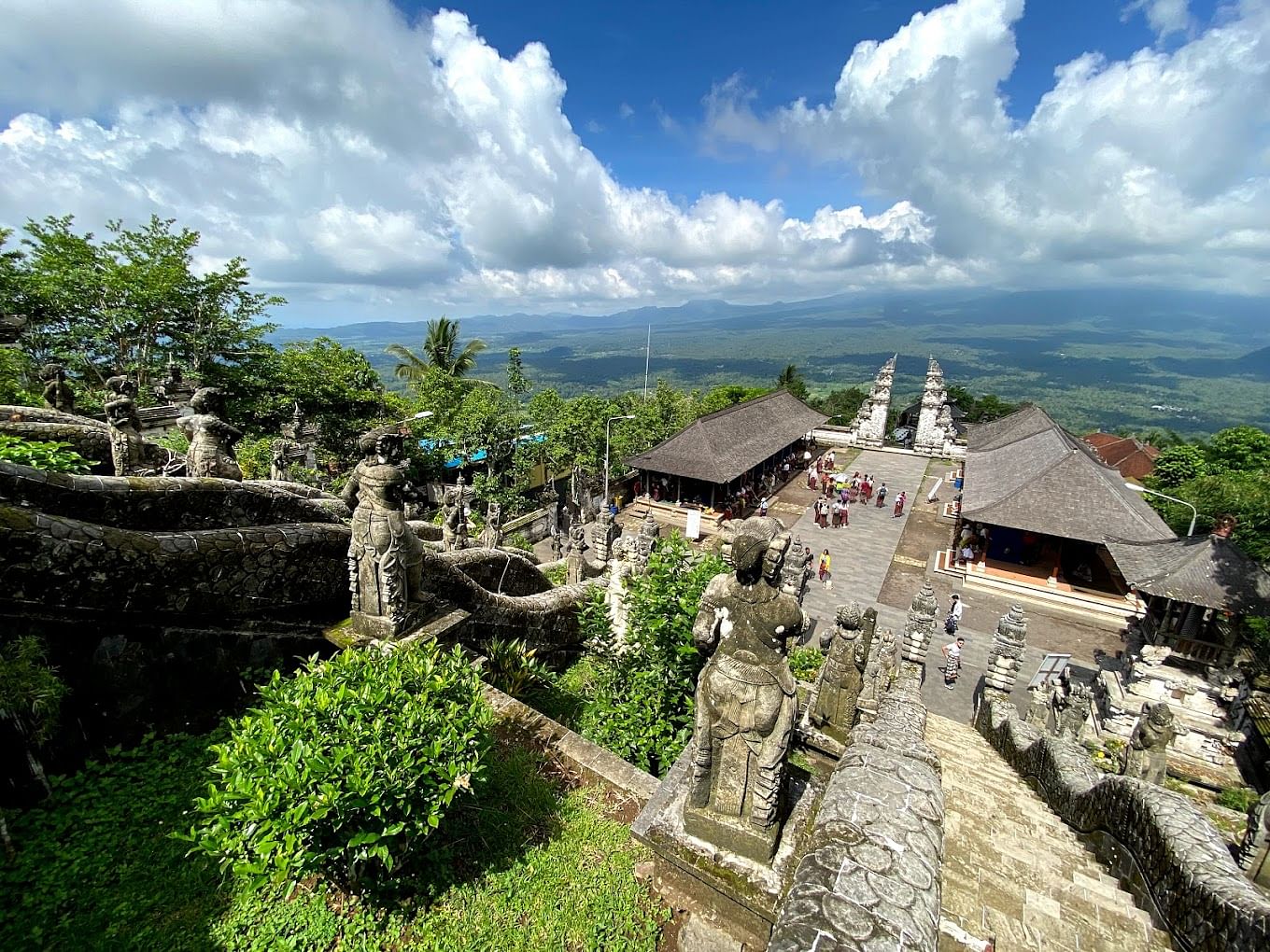
The temple is really a chain of seven, climbing Mount Lempuyang in the far east of Bali. From the lowest to the highest they are Pura Penataran Agung Lempuyang, Telaga Mas, Telaga Sawang, Lempuyang Madya, Puncak Bisbis, Pasar Agung and, at the summit, Pura Lempuyang Luhur. A full pilgrimage means climbing to all of them, about 1,700 steps in total.
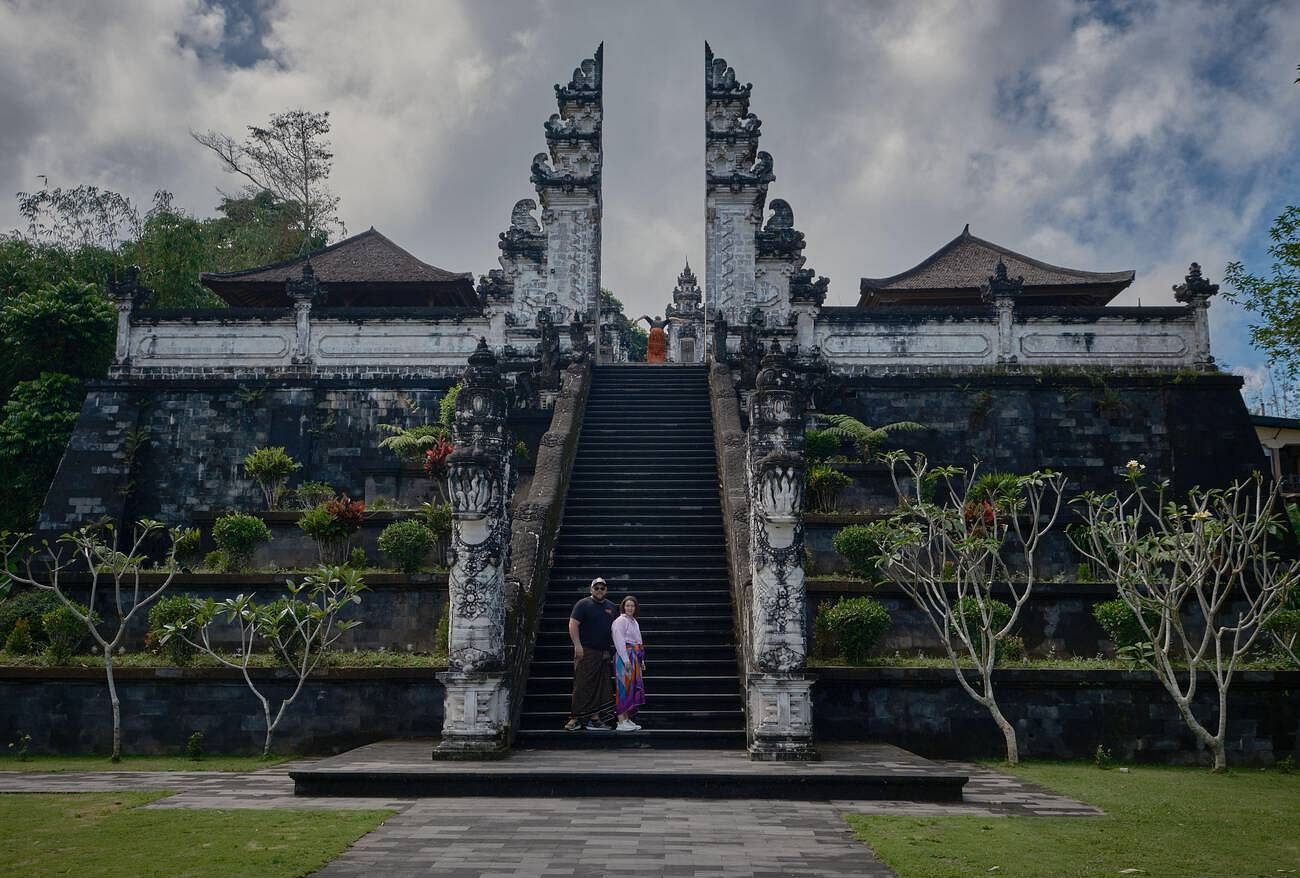
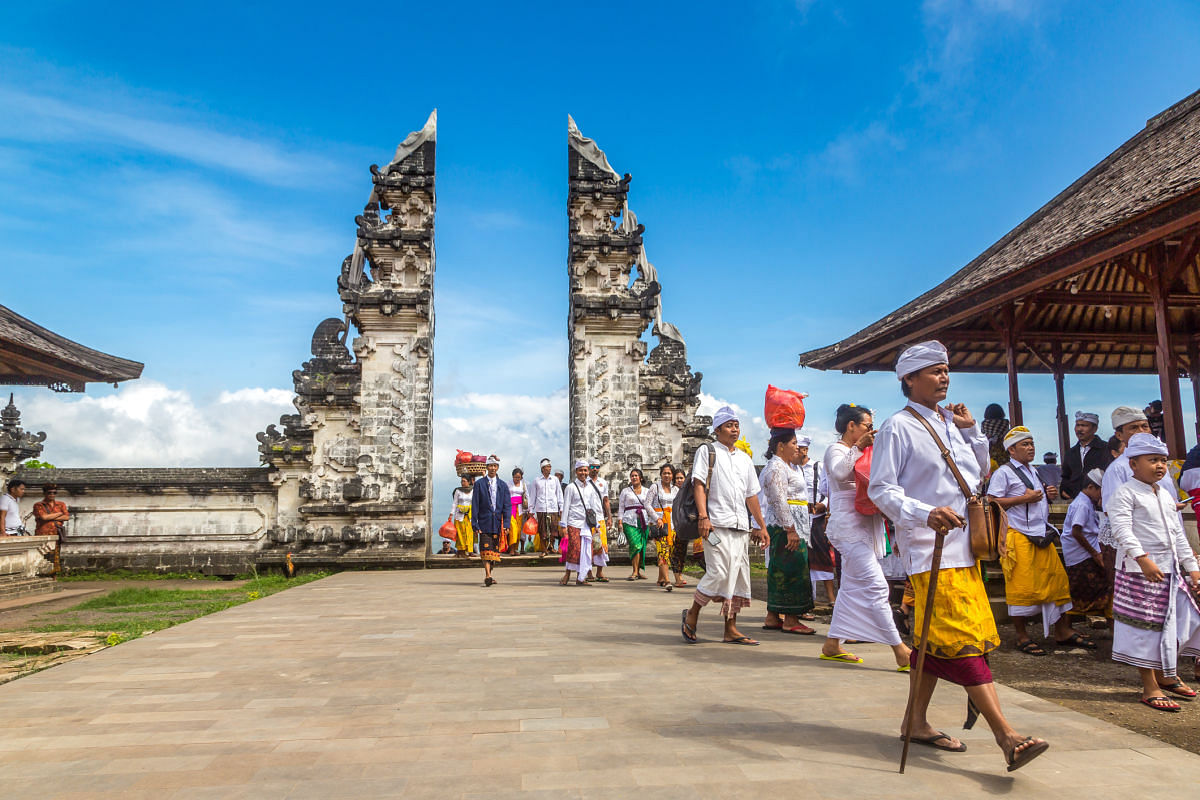
The famous gate belongs to the first temple, Penataran Agung, at the start of the climb. It is a candi bentar, the split gateway found at the entrance to many Balinese temples, and it marks the passage from the outer world into the temple courtyards. Most visitors photograph it and leave without knowing that the pilgrimage goes on above them.
The Gates of Heaven Photo: How It Really Works
The Gates of Heaven Bali photo is real in every way except one: there is no water. The "lake" reflection comes from a small mirror that a local photographer holds just under your phone's lens. It turns the stone floor into a perfect reflection of the gate and the sky. This Lempuyang mirror photo trick is simple and clever, and knowing it makes the picture more fun, not less.
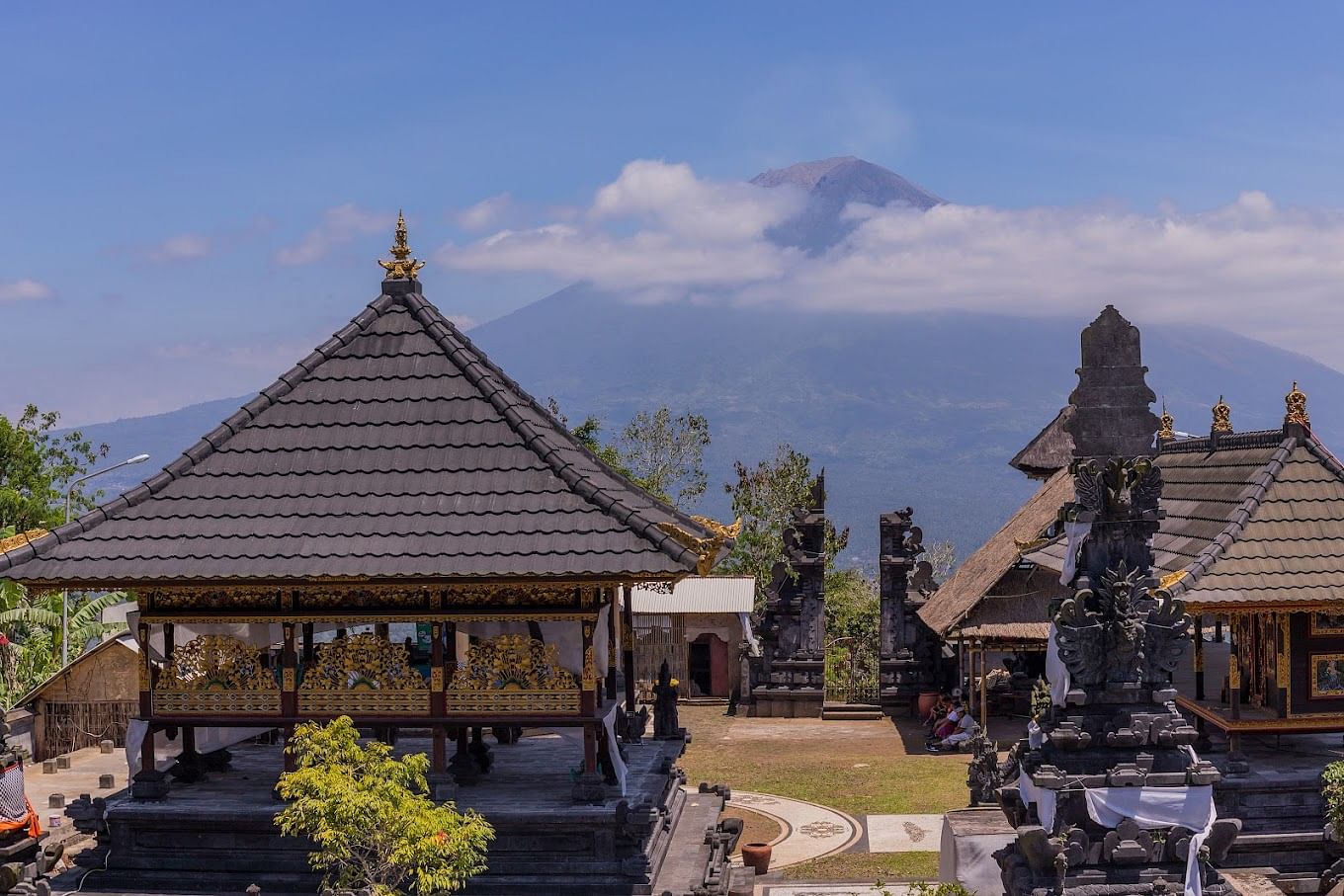
Everything else is real. The gate stands on a terrace facing Mount Agung, Bali's highest and most sacred volcano, and on a clear morning the view is magnificent. It is still a beautiful frame. It just isn't a lake.
How the system runs (checked 26 October 2026):
• You get a number with your entry ticket at the bottom of the hill.
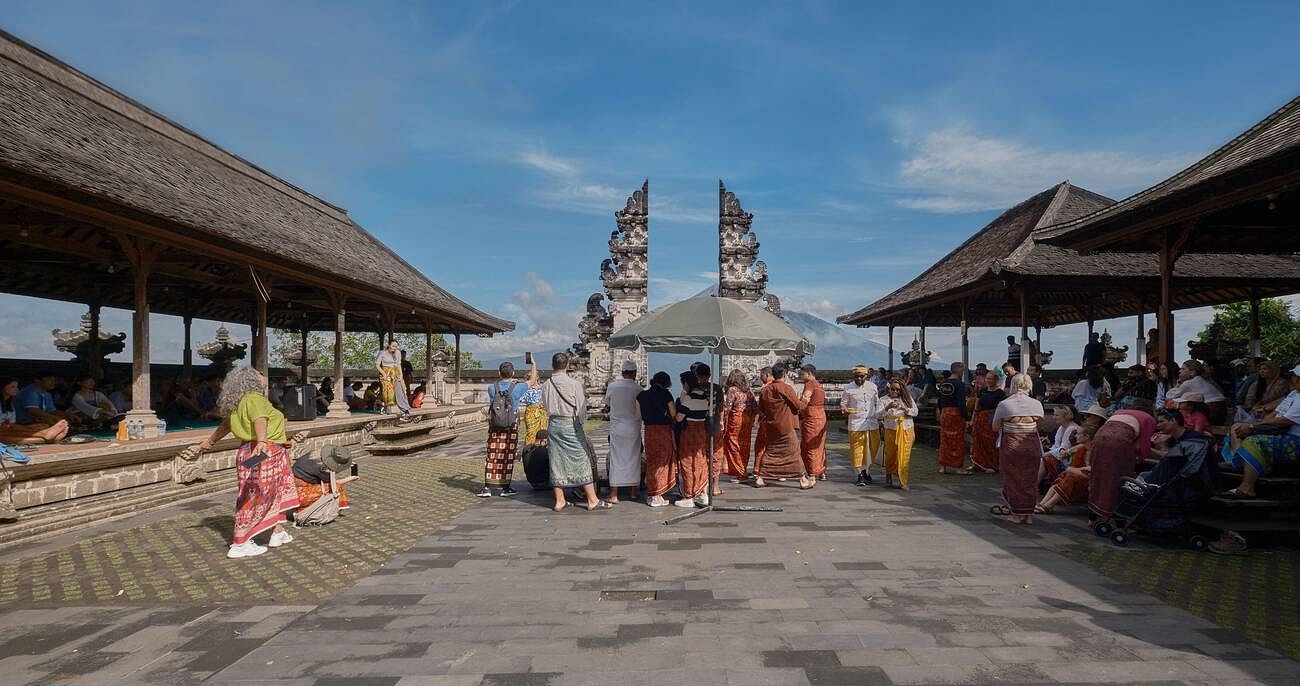
• At the gate, staff call numbers by megaphone in groups of five or ten.
• When your group is called, you hand your phone to the local photographer, who shoots with the mirror. You get about a minute and a few poses, usually around three to five, with no retakes.
• The photographer doesn't charge, but a small tip of IDR 10,000 to 20,000 is customary.
The Lempuyang Temple queue usually runs two to four hours from mid-morning, and drops to under an hour at the first shuttle or in late afternoon. That is the pattern in visitor reports from 2025 and 2026, though it varies with the season and the day.
Why does 6 am beat 9 am by hours? Early arrivals are mostly people staying nearby in Amed or Candidasa. By 9 am, the day-trip cars from Ubud and the south have arrived and joined the same line. Since each photo slot takes about a minute, a hundred people ahead of you is close to two hours.
The dawn plan in full. Sleep in Amed or Candidasa the night before, 40 minutes to an hour from the terminal. Leave by about 4:45 am, buy your ticket and board the first shuttle at about 5:30 am, and you will usually be among the first numbers called while Mount Agung is still clear. From Ubud or the south, the same timing means leaving at about 3 am, which is possible with a driver but makes for a long, tiring day. Everything else on this page assumes this plan.
Be honest about the weather too. Mount Agung is clearest from roughly April to October, and even then cloud builds by late morning. In the wet season the queue is short, but the sky behind you may be white. If the backdrop matters, go early in the dry season and treat it as a gamble.
Entry, Shuttle, Sarong and Conduct Rules
Fees (checked 26 October 2026): entry is IDR 100,000 for foreign adults, which includes Indian visitors, and IDR 50,000 for Indonesians. The return shuttle from the main terminal to the temple costs IDR 50,000 and is compulsory, since private cars can't drive up. That is about IDR 150,000 per person, or roughly ₹800, plus IDR 5,000 to 10,000 for parking. Carry the exact amount in cash, as the ticket office does not take cards.
Hours and dawn access. The listed tourist hours are about 7 am to 5 pm, while worshippers can come at any time. In practice, the first shuttle leaves the terminal at about 5:30 am and dawn visitors ride it up, buy their tickets and join the photo queue before 7 am, which is what makes the sunrise plan work. If staff ask early arrivals to wait until 7 on the day, you will still be near the front of the line.
The Lempuyang Temple dress code: cover your shoulders and knees, and wear the sarong and sash provided at the ticket office, even over long trousers. You can bring your own sarong if you prefer.
Who may not enter: under Balinese Hindu custom, women who are menstruating are asked not to enter the temple grounds, and the same applies to people in mourning or with open wounds. These rules are taken seriously here, as at most Balinese temples, and visitors are trusted to respect them.
Temple etiquette:
• Keep your head below the priests' and don't step on offerings on the ground.
• Don't climb on shrines or walls, and stay out of the inner courtyards, which are closed to tourists.
• Keep poses respectful at the gate: no kissing, handstands or jumping shots.
• Speak quietly, and give way to anyone who has come to pray.
Beyond the Gates: The Climb Most Visitors Skip
Above the gate, the real pilgrimage begins. A stairway of about 1,700 steps climbs through forest to the summit temple at about 1,060 metres, passing the other five temples on the way. It is steep and humid, and allow about 1.5 to 2 hours up and 3 to 4 hours for the round trip.
Casual visitors are welcome on the stairway as long as they dress and behave as they would at the gate. The inner sanctuaries remain for worship, so stay outside unless you are invited in. A few practical notes:
• Start early, before the heat, and carry at least 1.5 litres of water.
• Local stalls along the way sell drinks and snacks.
• Monkeys on the upper path snatch food, bottles and sunglasses, so keep them out of sight.
• Pilgrims take the climb seriously, so give way on narrow steps.
The payoff is quiet. You leave the queue behind within minutes, and the higher temples are mossy and peaceful, with views towards Lombok on a clear day. If the gate photo leaves you flat, this is the part that tends to stay with people.
More East Bali Temples Nearby
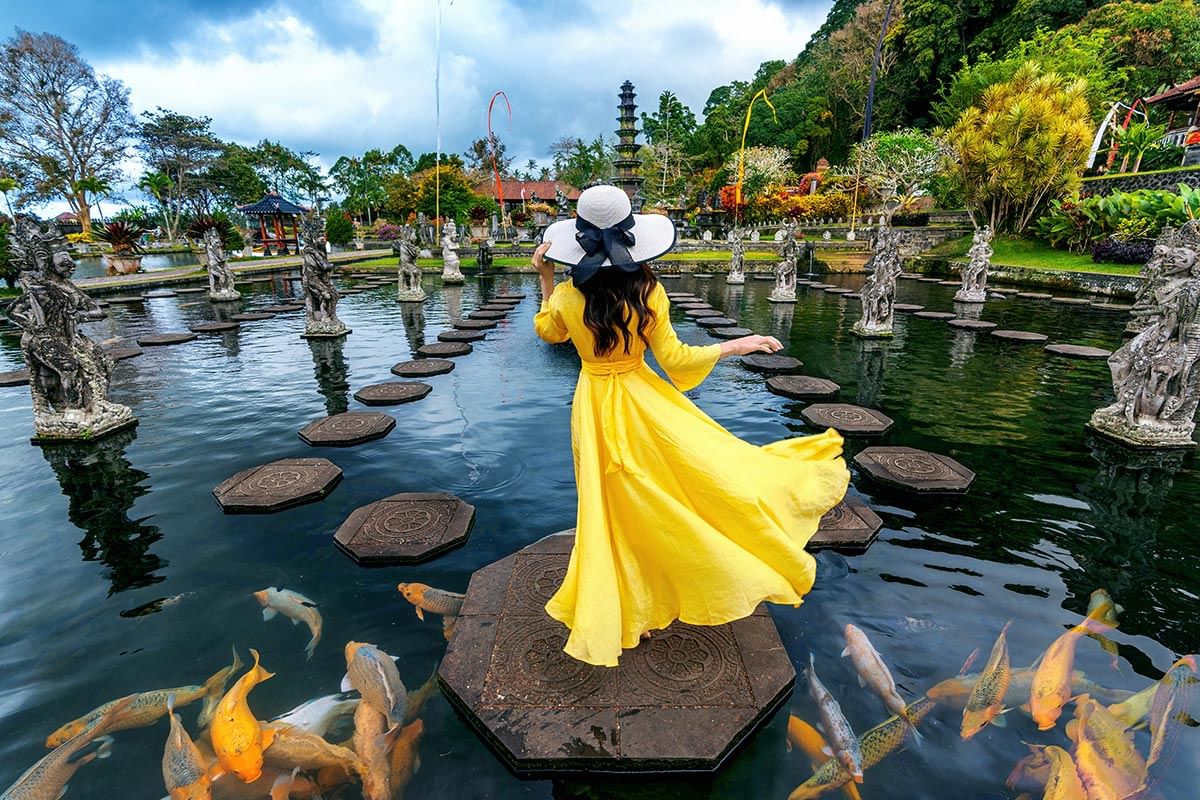
If temples are the reason you came east, two more are worth adding on another day. Besakih, the mother temple on the slopes of Mount Agung, is the largest and most important in Bali, about an hour and a half from Lempuyang. The water temple at Tirta Gangga is closer and pairs easily with a morning at the gate.
The East Bali Day Built Around a Dawn Lempuyang
The best east Bali itinerary starts at the gate before sunrise and goes downhill from there, in the good sense.
• 5:30 am, Lempuyang: take the first shuttle, queue for the photo while Agung is clear, and climb part of the way if you have the legs.
• Mid-morning, Tirta Gangga water palace: about half an hour's drive away. Its pools, stepping stones and fountains are a gentle contrast after the stairs, and it is quieter before the midday tour buses arrive.
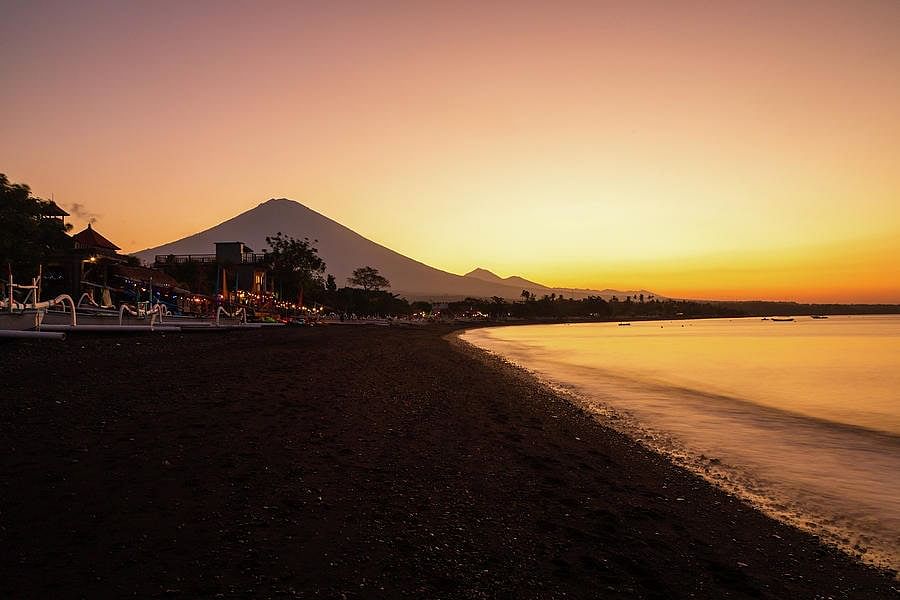
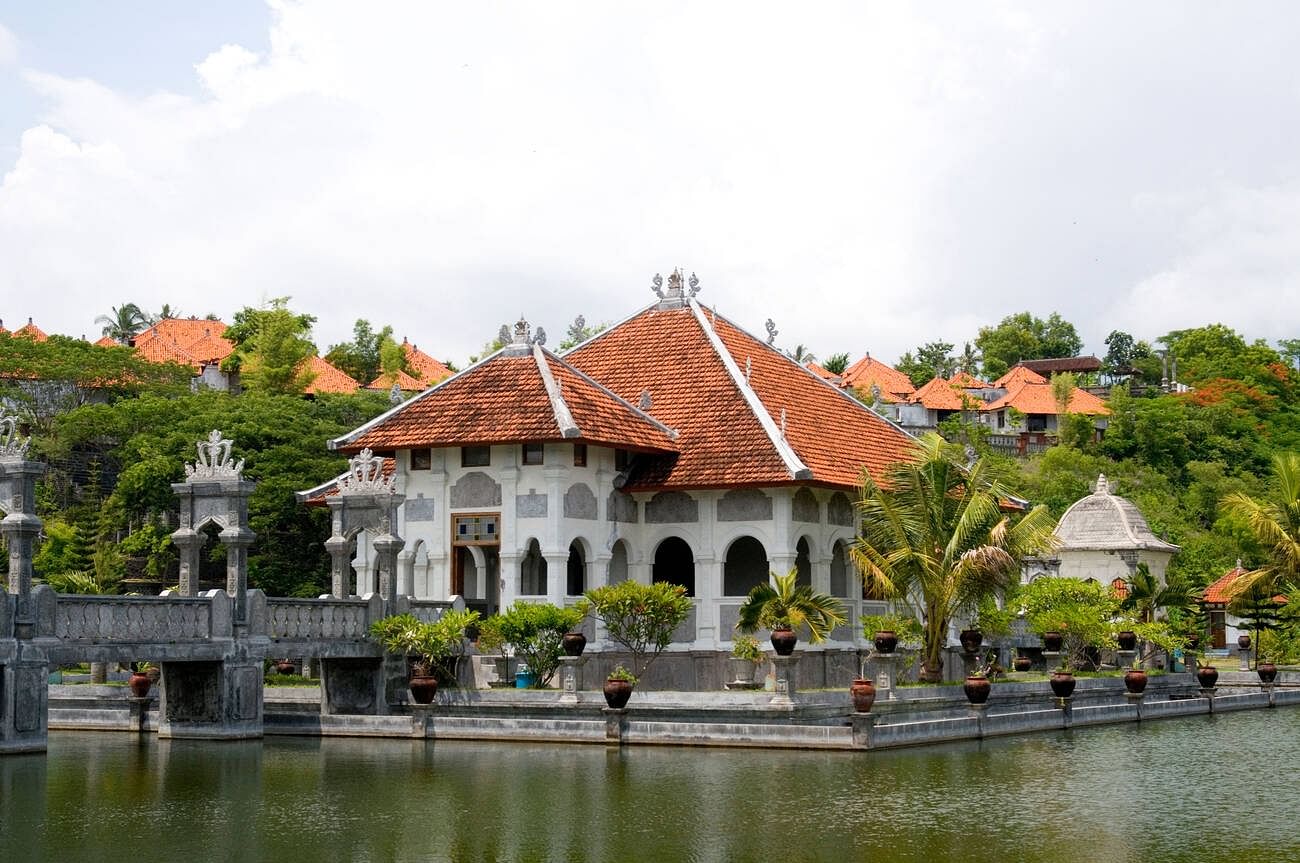
• Early afternoon, choose one: Taman Ujung, the larger water palace near the coast, or lunch and a swim at Amed, with its black-sand beaches and calm snorkelling.
With the night before spent nearby, as in the dawn plan above, the whole day runs without a rushed start.
Getting There from South Bali and Ubud
Lempuyang is in Karangasem, Bali's far east, and the drive is the biggest part of the day.
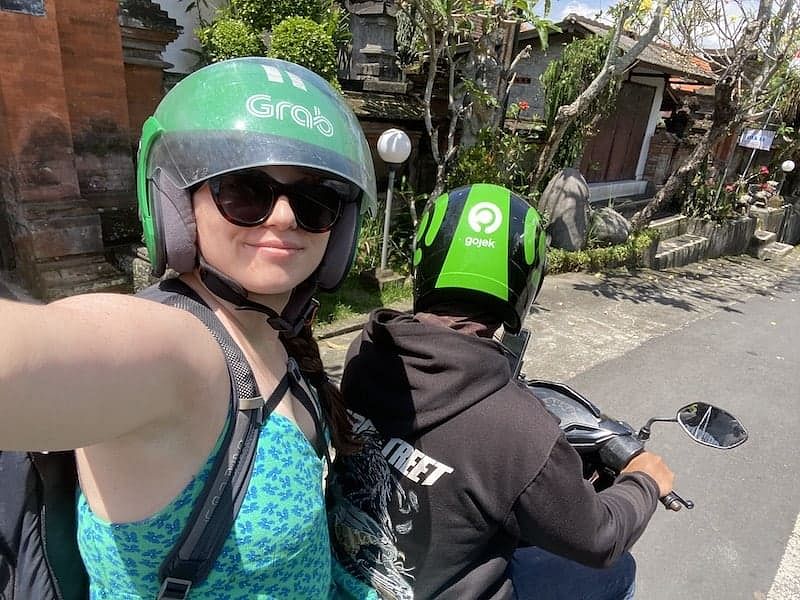
From Ubud or the south, a dawn arrival means a pre-dawn start, which is why the dawn plan above suggests a night in the east. Most travellers hire a car and driver for the day, typically about IDR 700,000 to 1,000,000 for 10 to 12 hours in recent quotes, plus fuel or overtime for very long days.
The driver drops you at the main terminal, where you buy tickets and board the shuttle.
What to Pack for a Pre-Dawn Start
• A light jacket. The mountain is cool before sunrise, even in the dry season.
• A head torch or your phone light for the steps between the shuttle drop and the gate.
• Cash in small notes for entry, the shuttle, parking and tips.
• Water and a snack, since the stalls may not be open when you arrive.
• Shoes with grip for the steep path and the stairs beyond the gate.