For 11 days every year, Mysuru turns into one of India's biggest cultural spectacles. The Mysore Dasara Festival brings together over 100 events across 15+ venues, all rooted in more than 400 years of royal legacy, and attracts an estimated number of over 30 lakh visitors from across the country and beyond.
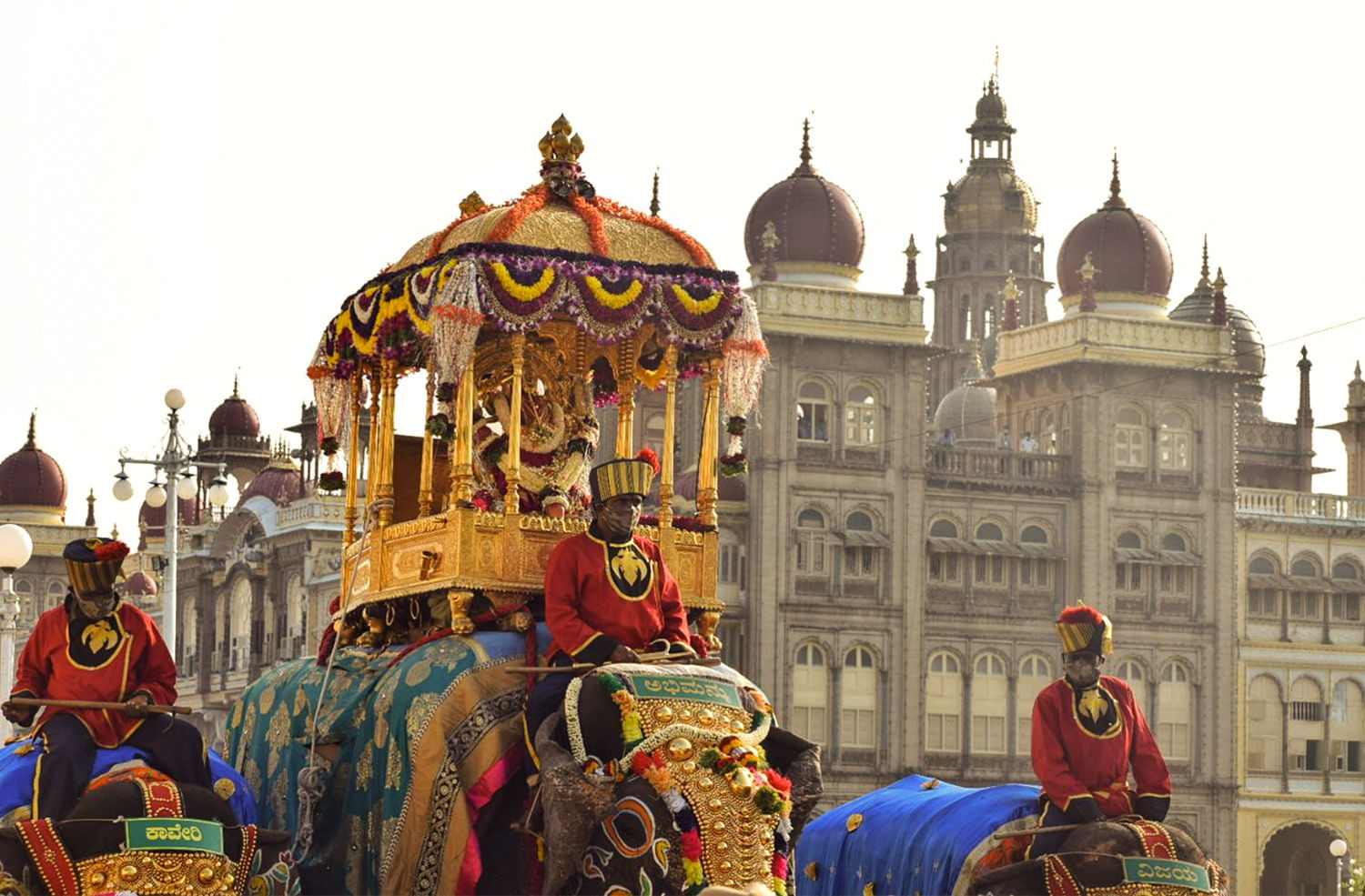
Known locally as Nada Habba, Karnataka's state festival, Dasara marks Goddess Chamundeshwari's victory over the demon Mahishasura, building up to the grand Vijayadashami procession that closes the celebrations. The Mysore Dasara date 2026 runs from 11-21 October, with the illuminated palace, cultural programmes & the iconic Jumboo Savari drawing crowds from the very first day.
If you are planning your visit around the procession, palace illumination, or any other Events and Festivals tour packages, this guide covers the key dates, tickets, events, history, exhibition details and practical tips for attending Dasara in Mysuru.
Mysore Dasara festival is celebrated to mark Goddess Chamundeshwari’s victory over Mahishasura, the demon associated with Chamundi Hill. The festival follows the nine nights of Navaratri and culminates in Vijayadashami, the day of victory.
Chamundeshwari is the presiding deity of Mysuru, and her temple sits on Chamundi Hill overlooking the city. During Dasara, the goddess becomes the centre of the public celebrations, with the traditional procession carrying her idol in the golden howdah on the lead elephant.
The Mysore Dasara history goes back more than 400 years, although its roots can be traced further to the Mahanavami celebrations of the Vijayanagara Empire at Hampi. After the empire fell in 1565, the Wadiyars of Mysuru continued the tradition.
Raja Wadiyar I celebrated Dasara at Srirangapatna in 1610, establishing the festival’s long association with the Wadiyar dynasty.
Under Krishnaraja Wadiyar III, Dasara took a more established form in Mysuru, while Krishnaraja Wadiyar IV expanded its public character through exhibitions, sporting events and illumination.
The festival also has a strong connection with the former Wadiyar royal court. What began as a royal religious celebration gradually developed into a public festival featuring cultural programmes, exhibitions, sports, food fairs and the grand Jumboo Savari. Today, Dasara is celebrated as Karnataka’s Nada Habba, or state festival, bringing together its religious and cultural traditions.