If you’ve spent any time researching Spiti Valley offbeat places, you’ve likely seen photos of the "Golden Temple" of Lhalung (“Land of Gods”). But there is a much bigger, much older mystery looming right behind the village.
Welcome to the Tangmar Mountain Lhalung, one of the few true color changing mountains India has to offer. Located in the remote Lingti Valley of Spiti, Himachal Pradesh at an elevation of 3,658 meters (12,000 feet), Tangmar is believed to be the home of the Lhalung Devta and surrounds the Lhalung village.
During a trip to Spiti Valley, most travelers miss this phenomenon because they don't know when to look. The secret behind the tangmar mountains color changing lies in its unique geology: the vertical cliff is packed with iron-rich sedimentary clay that reflects high-altitude UV light differently as the sun moves.
Here is a complete breakdown of why it happens, how to go, and exactly when to get the best shots.
Quick Details: Tangmar Mountain At A Glance
- Location: Lhalung Village, Lingti Valley (approx. 30 km from Kaza)
- Altitude: ~3,658 meters (12,000 feet) at the village base
- Best For: Landscape Photographers, Spiritual Seekers, and Offbeat Travelers
- Viewing Window: 4:30 PM to 6:30 PM is the peak "Golden Hour”
- Best Season: September to October (clearest skies for color shifts)
- Trekking Status: Not possible on the mountain face. The vertical cliff is made of loose, crumbling sedimentary clay and is spiritually off-limits.
- Accessibility: Easily visible from Lhalung village; no hiking required to see the effects.
Best-Selling Spiti Valley Packages
The Legend Of The Lhalung Devta
The 45 families of Lhalung Village believe this mountain is the physical home of the Lhalung Devta, the supreme deity, protecting the valley.
According to local folklore, the tangmar mountains color changing hues reflect the God’s mood in real-time:
- Bright Yellow/Gold: The Devta is happy (usually during a good harvest)
- Deep, Fiery Red: The Devta is angry
- Dull Blue/Grey: The Devta is sad or mourning.
Whether you believe in the spirits or not, standing at the base of the Tangmar Mountain’s color changing peaks feels like you’re watching a giant, silent performance.
Why Does Tangmar Mountain Change Color?
While the legend is beautiful, there is a fascinating geological reason behind the tangmar mountains color changing phenomenon.
- Sedimentary Red Clay: The mountain is primarily composed of sedimentary rocks and red clay heavily packed with iron oxide. This is the same stuff that makes Mars red!
- High-Altitude UV Light: At over 12,000 feet, the atmosphere is thin. The sun’s rays are "sharper" (higher UV), which makes mineral reflections much more intense than at sea level.
- The "Angle of Incidence": Because the cliff face of Tangmar Mountain Lhalung is almost vertical, the shadow-to-light ratio changes drastically every hour.
The Science of the Color Shift:
- At Noon: The sun is directly overhead. This causes the iron in the rocks to oxidize visually, making the mountain look like it’s "bleeding" a deep, fiery red.
- At Sunset: The low-angle "Golden Hour" light hits the clay particles, reflecting back as a brilliant, glowing yellow.
- The "Blue" Mystery: On cloudy days or during twilight, a phenomenon called Rayleigh Scattering (the same thing that makes the sky blue) kicks in. Without direct sunlight, the shadows on the dark rocks take on a moody, blue-grey tint.
Best Time To See Tangmar Mountain Colors
If you want to catch the mountain in its full glory, timing is everything. You can't just show up at 10 AM and expect a miracle. The best time to visit Tangmar Mountain depends on the position of the sun.
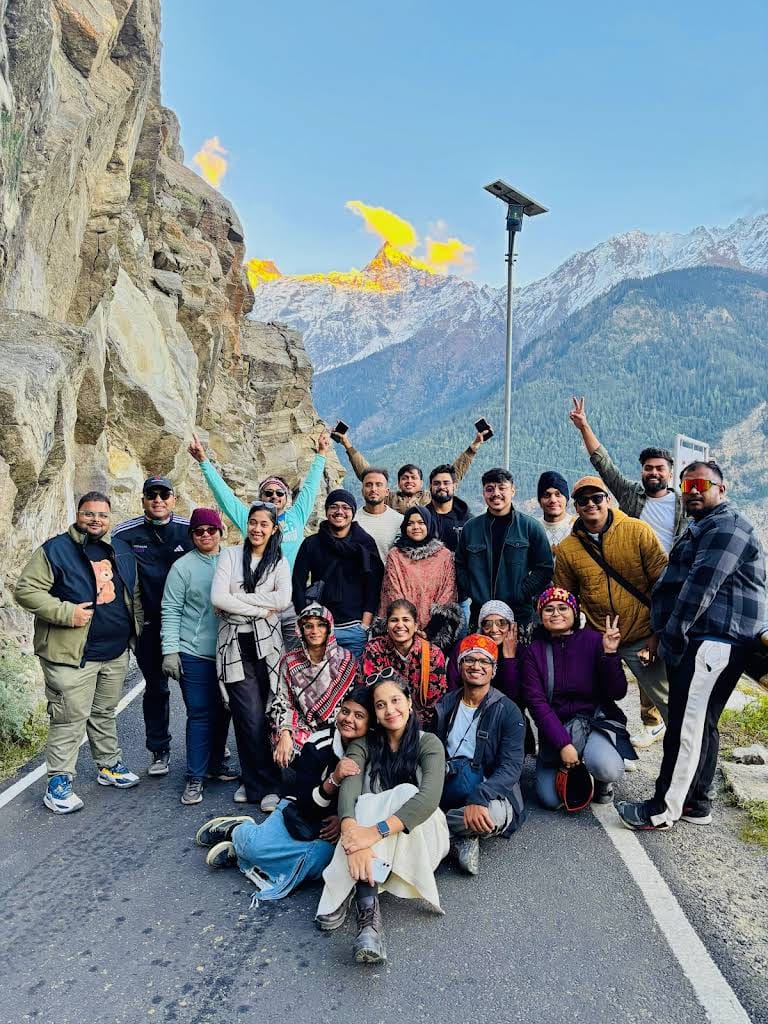
- Best Time Of The Day: The most dramatic shifts happen between 4:30 PM and 6:30 PM. This is when the mountain turns into a wall of gold.
- Best Time Of The Year: Although the best time to visit Spiti Valley is from June to September, if you’re particularly visiting for this offbeat location, you need to change the window. The best time to visit Tangmar Mountain is from September to October. The air is the clearest during these months, meaning no haze or dust gets between you and those vibrant colors.
Top Spiti Valley Tour Packages
How To Reach Tangmar Mountain Lhalung?
Getting here is half the fun. Lhalung is tucked away in the Lingti Valley (a side valley of the main Spiti circuit), so it’s easy to zoom past if you aren’t careful.
1. The Attargo Bridge Route (Easiest & Most Scenic)
If you’re just starting off, read how to reach Spiti Valley from bases like Shimla/Manali. Or if you are coming from Kaza (about 30 km away), head toward Tabo.
- The Landmark: Look for the Attargo Bridge, where the Spiti and Pin rivers meet. Cross it and take the immediate right.
- The Road: You’ll pass through Rama and Lidang villages. The road is a bit narrow and climbs steeply for about 10 km, but it’s mostly tarred.
- Pro Tip: Keep your windows down; as you climb, the Tangmar Mountain Lhalung starts appearing on your left like a giant wall.
2. The Dhankar Detour (For the Explorers)
If you are already at Dhankar Monastery, you don’t need to go back to the main highway.
- The Route: There is a back-road that connects Dhankar to Lhalung directly via the villages of Tulse and Pena.
- The Condition: It’s a "kucha" (dirt) road and takes about an hour. Only take this if you have a high-clearance vehicle (like a Thar or Gypsy).
3. The Dhankar To Lhalung Trek
For those who want to feel the scale of the color changing mountain Spiti, this is the way to go.
- Duration: 4–5 hours of moderate walking
- The Experience: You’ll trek through the Lingti Gorge. The mountain stays in your sight almost the entire time, so you can watch the colors shift as you walk.
Can You Trek On Tangmar Mountain?
If you’re looking to stand on the very top of Tangmar Mountain, you can’t and you probably shouldn't try.
Unlike the trekking peaks of Kanamo or Yunam, Tangmar is a near-vertical sedimentary cliff made of loose red clay and crumbling shale.
It is technically "unclimbable" for hikers and spiritually off-limits for the locals. However, you can trek the stunning trails that wrap around its base and mid-section.
The Best Trekking Options Near Tangmar:
1. The Demul to Lhalung Trail (Moderate)
This is the gold standard for seeing the mountain. It’s a 4–5 hour trek that starts at the high plateau of Demul (4,350m) and descends into the Lingti Gorge. You’ll have a front-row seat to the tangmar mountains color changing face the entire way down.
2. The Lhalung to Dhankar Lake Trail (Moderate)
Instead of taking the dusty road, there is an ancient shepherd’s path that connects Lhalung directly to the turquoise Dhankar Lake. It takes about 3 hours and offers a "bird’s eye" view of the Tangmar Mountain Lhalung range meeting the river.
3. The "Base Walk" (Easy)
If you aren't a pro trekker, simply walk 20 minutes out of Lhalung village toward the Rama village side. You’ll be walking right at the foot of the giant red wall, perfect for feeling the scale of the color changing mountain Spiti without the heavy panting.
Pro Trekker Tip: The soil here is "scree" (loose rocks). If you decide to wander off the marked paths near the base, wear boots with excellent grip. The red clay becomes incredibly slippery if there’s even a hint of moisture in the air.
Top Spots On Tangmar Mountain For The Best Views
To see the color changing mountain Spiti, you don't actually climb the peak; you find the best spots around it. Here is where you should stand:
1. The Serkhang (Golden Temple) Backyard
This is the "classic" shot. Walk past the main prayer hall to the edge of the Lhalung Monastery
(Golden Temple) complex. There is a small ridge here where the mountain face feels so close you could touch it.
- Best For: Watching the deep reds turn to gold at 5:00 PM.
2. The "Lhalung Gate" Hairpins
The "Scale" shot. About 1 km before you enter the village, there are a series of sharp hairpin bends. Stop your car at the second bend.
- Best For: Capturing the entire mountain range with the tiny white houses of the village nestled at its feet.
3. The Lingti River Bed
This is the "Reflection" shot. Take the small walking path down from the village toward the river.
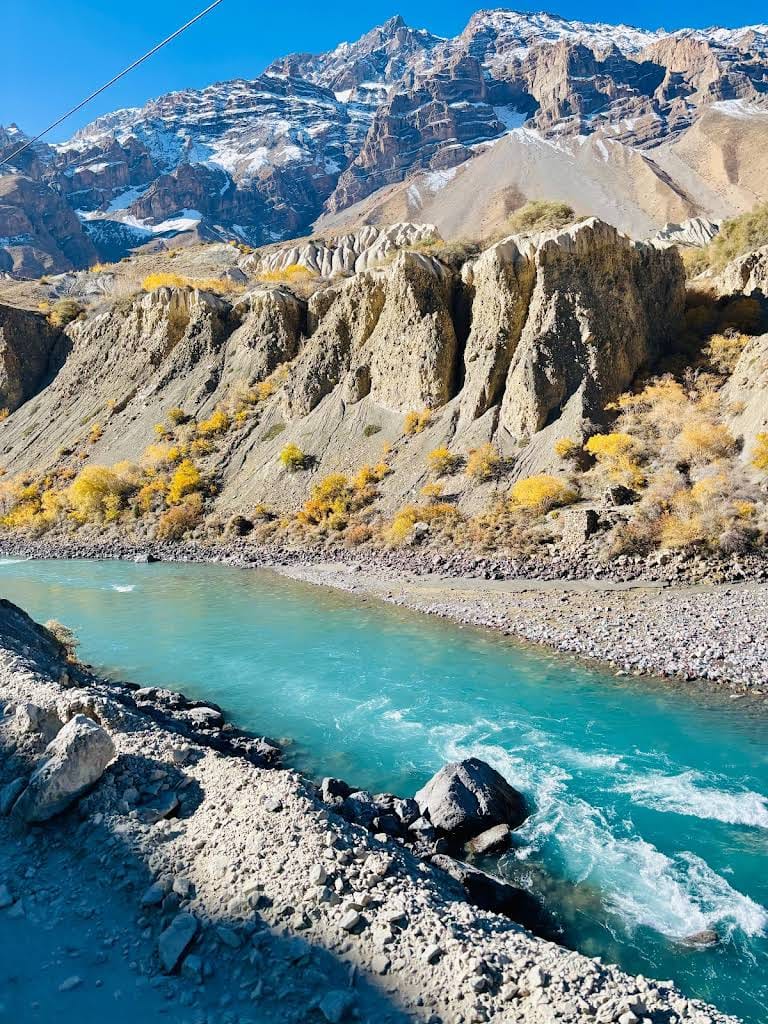
- Best For: Contrast. The turquoise water of the Lingti River against the "angry red" of the mountain at high noon is a sight most travelers miss.
4. The Demul-Lhalung High Trail
For the "Bird's Eye" shot. If you are trekking from Demul, don't wait until you reach the village. About 30 minutes before the final descent, you are at the perfect eye-level with the mountain's mid-section.
- Best For: Seeing the different mineral layers (the blues and greys) that aren't as visible from below.
Check Out Our Popular Spiti Trips
Local Etiquette & Tips For Tangmar Mountain Lhalung
- Respect the Silence: Lhalung is a "devta" village. It’s incredibly quiet. Avoid loud music, shouting, or honking to maintain the meditative atmosphere.
- No Climbing: Do not attempt to scale the loose clay sections of the mountain. It’s dangerous for you and disrespectful to the "home" of the deity.
- Don't Touch the Mud Walls: The 1,000-year-old Serkhang walls are made of fragile mud and straw from the mountain; avoid leaning on or touching them to prevent erosion.
- The Clockwise Rule (Pradakshina): Always walk around the monastery, stupas, or mani stone walls in a clockwise direction to follow local Buddhist tradition.
- Permission for Photography: Always say "Juley!" and ask for permission before clicking photos of the monks or the 45 local families.
- Pack Out Your Plastic: Lhalung has no waste management; carry all your wrappers and bottles back to Kaza to protect this fragile "Land of the Gods”.
Check out the essential travel tips for Spiti Valley to plan a smooth journey to the cold desert.
Tangmar Mountains Lhalung: Is It Worth The Detour?
If you’re tired of the crowded checklist spots and want to see something that feels truly ancient, Tangmar Mountain is the best place to go. Among all the Spiti Valley offbeat places, this one has the most soul.
The Tangmar Mountain Lhalung isn't just a rock; it’s a story told in colors. It’s easily one of the most unique color changing mountains India has to offer. Plan your ultimate escape now!